
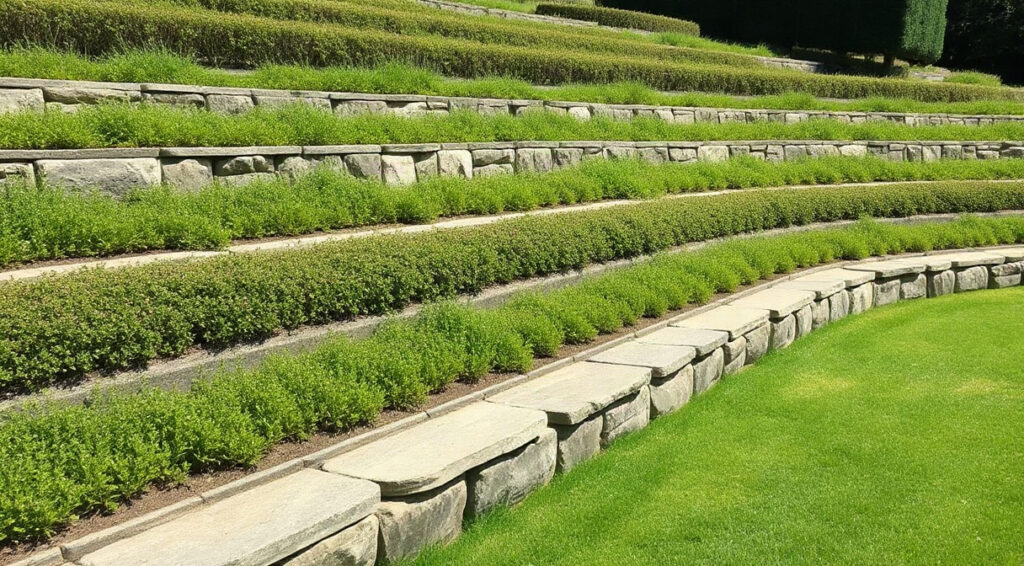
Sloped garden ideas can turn a hard-to-mow hillside into a sequence of welcoming spaces for planting, sitting, and moving around safely. The key is to work with the land rather than fight gravity: understand how water travels, choose structures that suit the slope, and use plants whose roots help hold soil in place. With a thoughtful plan, even a challenging incline can become a garden with purpose and character.
This guide covers how to assess a slope, plan terraced garden beds, choose suitable retaining wall designs, and plant for erosion control without sacrificing visual appeal. Begin with careful observation, then build in stages so drainage, access, and planting all work together.
1. Assess the Slope Before Choosing Sloped Garden Ideas
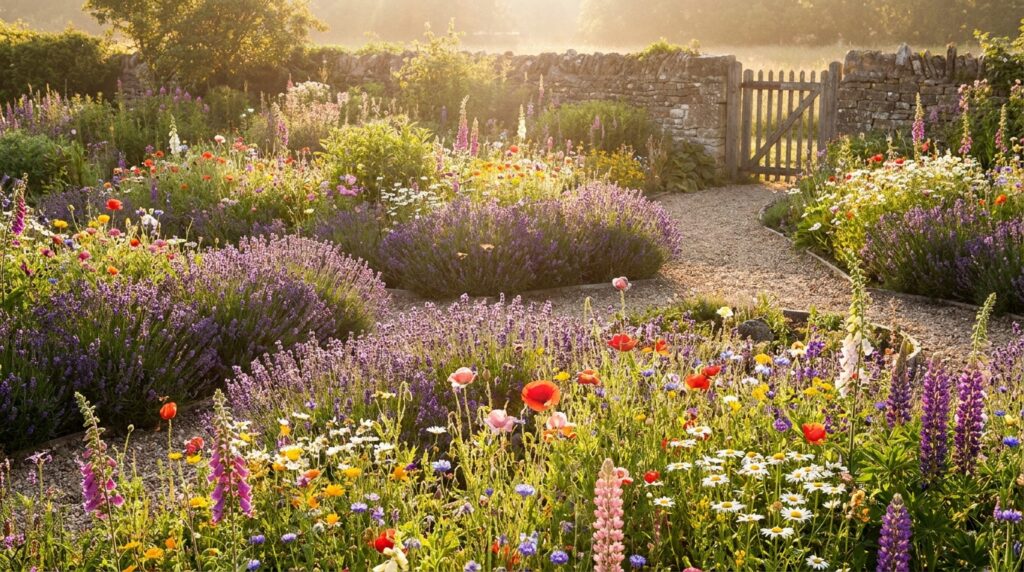
Before buying materials or digging, learn how the site behaves. Walk the garden after a light rain and again after a heavy storm. Note where water runs quickly, where it pools, and whether soil washes onto paths or toward the house. These observations help determine where terraces, channels, or planting buffers will do the most good. A garden that looks dry in summer may carry a surprising volume of runoff during winter rain.
Measure the slope’s length, height, and approximate gradient. A simple method is to set a straight board level on the ground, measure its horizontal length, then measure the vertical drop at its downhill end. Repeat in several places because slopes are rarely uniform. Mark existing trees, drains, utility lines, property boundaries, and areas that already feel stable. These details can prevent costly rework later.
Look for warning signs and site constraints
Cracks in the soil, leaning fences, exposed roots, small slumps, or water emerging from the bank may indicate instability. Do not cover these signs with fresh soil or build a wall over them. Get advice from a qualified local professional if the slope is steep, high, close to a building, or showing movement. Local rules may require permits for retaining structures, and some sites need engineered drainage or structural design.
Also consider sunlight, wind, soil texture, and access. A sunny upper bank may suit drought-tolerant groundcovers, while a damp lower area may need plants that tolerate wet feet. Sandy soil drains quickly but can shift; clay holds water and may become heavy when saturated. Take a soil test before choosing plants or adding amendments, especially if you plan to grow vegetables.
Use these observations to set practical goals. Decide whether the main priority is a level seating area, easier maintenance, a productive garden, or a safer route across the slope. A design does not need to flatten the entire yard. Often, one modest level landing and a winding path make the space more usable while preserving the natural contour.
- Photograph the slope from several angles and mark wet spots after rain.
- Identify the likely destination of runoff before redirecting it.
- Check local building requirements before planning tall walls.
- Keep established, healthy trees where possible; their roots can help stabilize soil.
These early checks make sloped garden ideas more successful because they connect the design to actual site conditions. For broader layout inspiration, compare your plan with ideas for shaping a garden bed in a tricky corner. The same habits—mapping sun, access, and mature plant size—are useful on a hillside, where every planting decision affects water movement and maintenance.
2. Shape the Ground with Terraced Garden Beds
Terracing divides a continuous incline into a series of smaller, flatter platforms. This can slow runoff, create planting areas that are easier to reach, and give the garden a clear visual rhythm. The best terrace plan follows the slope’s shape rather than forcing rigid, oversized steps into it. On a broad hillside, a few long, shallow levels may look calmer than many narrow ones. On a smaller slope, compact beds can make planting and harvesting more manageable.
Start by deciding what each level will do. A wide upper terrace might hold a small table or a pair of chairs, while lower levels can support herbs, vegetables, shrubs, or flowers. Include enough room to kneel, carry a watering can, and maintain the back of each bed. If beds are too deep to reach from either side, routine care becomes difficult and plants may be neglected.
Set practical dimensions and access
There is no single correct terrace height or depth. The right dimensions depend on the site, materials, and intended use. Keep individual rises modest where possible, and create broad landings rather than steep, abrupt steps. If a terrace needs a substantial wall, consult an experienced contractor or engineer before excavation. Long, low walls often feel more natural than one tall barrier, but they still need a stable base and a safe way to manage water.
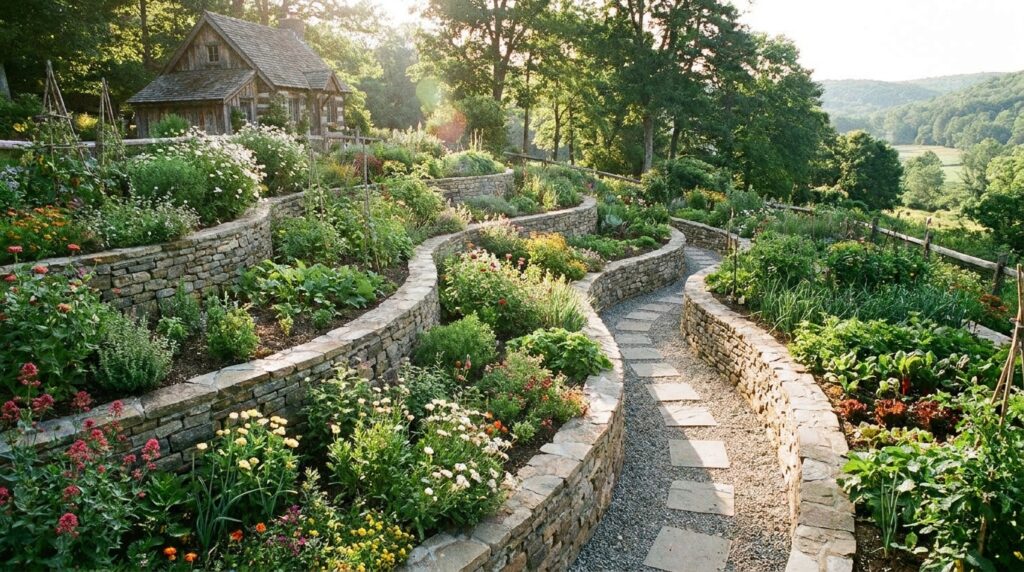
Plan paths as part of the terraces, not as an afterthought. A gently zigzagging route reduces the steepness of the climb and can connect several levels. Make it wide enough for the garden’s real uses, such as carrying compost or moving a wheelbarrow. Gravel can provide a permeable surface, while stone or pavers create a firmer route. For edging inspiration, see these gravel path edging ideas for defined garden routes.
When laying out terraced garden beds, use a hose or string to test curved lines before digging. Curves can soften a formal hillside and help terraces fit around existing trees. Straight edges may suit a contemporary garden, but long rigid lines can emphasize a slope if they are not balanced with planting. Repeat a small number of materials and plant colors to keep multiple levels visually connected.
- Mark each proposed terrace and path on the ground.
- Check that the route between levels is comfortable and safe.
- Confirm how each terrace will drain before building its edge.
- Set aside topsoil so it can be returned to planting areas.
Avoid excavating a wide strip all at once, especially before a rainy forecast. Exposed soil can wash away quickly, and cutting into the slope may undermine plants or structures above. Work in manageable sections, protect bare ground with mulch or a temporary cover, and keep soil from entering drains. If you are using new beds for vegetables, a no-dig approach may help preserve soil structure; learn about building healthier soil with a no-dig gardening method.
Well-planned terraced garden beds make a hillside easier to use without requiring every inch to be level. Leave some areas planted as slopes, especially where construction would disturb mature roots or create unnecessary cost. A mix of level beds, stable planted banks, and accessible paths often looks more natural and performs better than a completely rebuilt hillside.
3. Choose Retaining Wall Designs That Suit the Site
Retaining walls hold back soil and define the edges of terraces, but they also need to cope with water pressure. A strong-looking face alone does not guarantee a stable wall. The footing, backfill, drainage, wall height, soil type, and load above it all matter. A wall below a driveway or a large tree has different demands from a low border around a flower bed. When in doubt, get site-specific professional advice rather than relying on a general diagram.
Possible materials include natural stone, concrete blocks, poured concrete, timber, and gabion baskets filled with rock. Each has a different appearance and construction method. Stone can blend well with a naturalistic garden, while modular blocks offer consistent shapes and a tidy finish. Timber can suit an informal design but may need replacement as it weathers. Gabions create a porous, textured feature, though their baskets and stone should be selected for the conditions and intended height.
Match appearance with structure
Consider scale and repetition when comparing retaining wall designs. A series of low walls can create planting pockets and reduce the visual weight of a large barrier. Slightly battered walls, which lean back toward the slope, may look settled into the landscape, but the required angle depends on the wall system. Avoid copying a detail from another garden without checking that it is appropriate for your soil and wall height.
Every retaining structure needs a plan for water. Water trapped behind a wall can add pressure and contribute to bulging, cracking, or failure. Common systems use free-draining backfill and a drainage layer, sometimes with a perforated pipe that carries water to a suitable outlet. The exact design varies. Do not direct runoff onto a neighboring property, public path, or building foundation. Keep outlets clear and confirm that the discharge point can handle the flow.
Seek professional guidance for tall walls, steep or unstable ground, walls supporting vehicles or buildings, and sites with poor drainage. Check local codes and utility locations before excavation. Even low structures can be unsafe if poorly founded, especially where children walk or play. Terracing can reduce the height of individual walls, but it does not eliminate the need for sound construction or appropriate drainage.
As you compare retaining wall designs, think about how the wall will age. Choose finishes that complement nearby paving, fencing, and the house. Leave room for plants to soften the edges, but do not allow woody roots to destabilize the structure or block drainage outlets. A narrow planting strip with compact perennials can bring color without hiding signs of movement that need attention.
- Choose materials suited to local weather and the wall’s structural demands.
- Include drainage details in the plan before construction begins.
- Keep soil and mulch away from weep holes and drainage outlets.
- Inspect walls after major storms for leaning, bulging, or new cracks.
Garden design guidance can help with layout and the relationship between hardscape and planting; see according to RHS Garden Design. For practical erosion-control planting information, review the University of Minnesota Extension’s guide to erosion control in shade gardens. Use these resources alongside local building advice, since a planting guide cannot replace engineering for a structural wall.
4. Plant for Erosion Control and Year-Round Appeal
Plants help protect soil when their roots bind the ground and their foliage softens the impact of falling rain. A layered planting plan usually works better than relying on one groundcover. Combine low, spreading plants, clump-forming perennials, and carefully placed shrubs or small trees. Aim for continuous cover, especially on exposed banks where bare soil can be washed away before new plants establish.
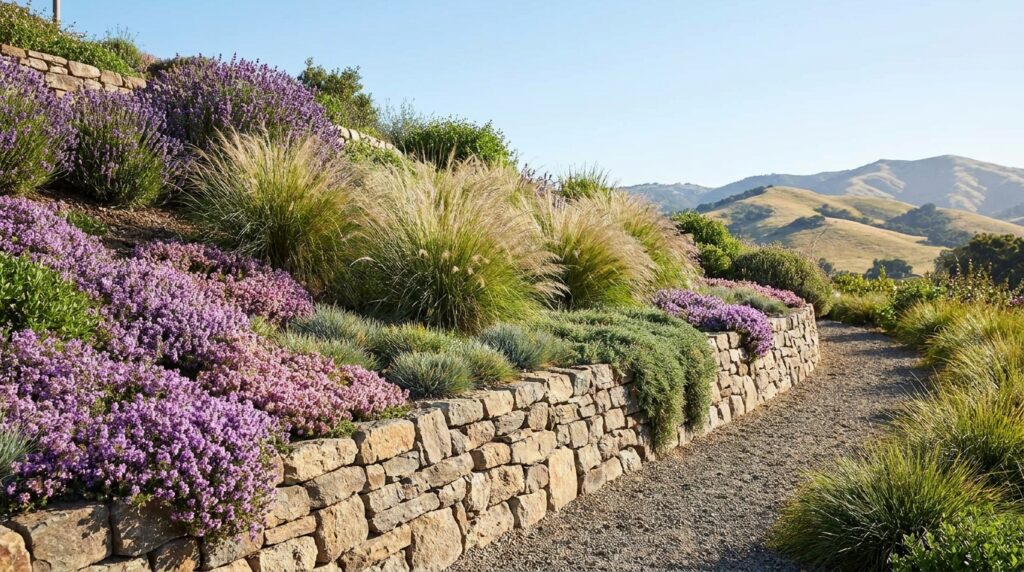
Choose plants for the slope’s sunlight, moisture, soil, and climate zone. In a sunny, well-drained bank, creeping thyme (Thymus serpyllum) can form a low aromatic cover, while ‘Blue Rug’ juniper (Juniperus horizontalis ‘Wiltonii’) provides evergreen foliage where its mature spread has room. For part shade, consider woodland sedges such as Carex pensylvanica, subject to local suitability. On a moist site, native rushes or suitable ornamental grasses may be better choices. Verify mature size and invasiveness before planting.
Plant densely enough to cover the soil
Set plants according to their mature width, not the small size of the nursery pot. Many groundcovers are spaced about 12 to 18 inches apart, but vigorous species may need wider spacing and slow-growing types closer planting. Follow the plant label and local guidance. Use biodegradable erosion-control matting on exposed soil when appropriate, pinning it securely and cutting openings for plants. Mulch between young plants, but keep it away from stems and avoid loose material that can slide downhill.
Mix plants with different root habits and seasonal interest. Spring bulbs can add early color between established perennials; ornamental grasses bring movement and structure in fall and winter. ‘Karl Foerster’ feather reed grass (Calamagrostis × acutiflora ‘Karl Foerster’) is a popular upright accent in many regions, though it needs suitable sun and room. Native flowering plants can support pollinators, especially when bloom times overlap. Explore bee-friendly flowering plants for a more wildlife-supportive garden.
For a cohesive look, repeat a few reliable plants across multiple levels and add a smaller number of seasonal accents. Repetition makes several terraces feel like one garden, while changes in height guide the eye. Use compact plants near paths and steps so foliage does not obscure footing. Avoid placing large shrubs where their mature canopies will block light from lower beds or conceal the condition of walls.
Do not expect plants to stabilize a slope instantly. Water new plantings carefully during their first growing season, especially in dry spells, and replace failed plants promptly. A common mistake is to plant too sparsely and leave wide gaps for a year or more; those gaps invite weeds and expose soil to runoff. For added seasonal color, consider long-blooming purple flowers for summer borders, selecting varieties that match your sun and hardiness conditions.
Well-chosen sloped garden ideas combine practical coverage with a clear planting composition. On steep banks, prioritize adaptable, spreading plants and stable groundcover over delicate specimens that require frequent digging. In flatter terraces, use richer combinations of vegetables, herbs, and flowers. The resulting contrast between structured beds and planted slopes creates both visual interest and a healthier, more resilient garden.
5. Manage Water, Paths, and Ongoing Maintenance
Water management is central to a safe hillside garden. The aim is to slow and guide runoff without creating a new problem downstream. Roof downspouts, paved areas, and compacted soil can send water toward a slope faster than plants can absorb it. Check where these flows enter the garden and consider whether a stable channel, planted swale, or rain garden is appropriate. The right choice depends on soil infiltration, slope, and local drainage rules.
A rain garden generally needs a suitable location where water can collect and soak in without threatening foundations or destabilizing a bank. Do not place one directly above a failing wall or on an unstable slope. If the site receives concentrated flow, ask a local landscape professional or drainage specialist to evaluate it. A thoughtfully planned rain garden design for managing runoff can complement hillside planting when the site conditions are right.
Make movement safe and maintenance realistic
Provide a route that feels secure in wet weather. Steps should be consistent in rise and depth, with a firm, slip-resistant surface and a handrail where appropriate. On long slopes, landings give people a place to pause and can connect beds at different heights. Keep leaves, moss, and loose gravel under control. A path that is beautiful but difficult to walk on will quickly become an unused feature.
Choose a maintenance routine that fits the garden’s real conditions. In spring, check drainage outlets, replenish mulch where it has moved, and inspect walls for damage. During the growing season, water new plants deeply but avoid creating runoff with a strong hose stream. In autumn, remove debris from drains and clear steps. After a major storm, look for fresh channels, exposed roots, washed-out mulch, or sediment collecting at the bottom of the slope.
Weeds are easiest to manage while plants are young. Pull them before they set seed, then close bare patches with suitable plants or mulch. Avoid repeated digging into steep banks; it can loosen soil and damage established roots. Where access is awkward, choose low-maintenance species rather than plants that need regular pruning, staking, or harvesting. Drip irrigation or a soaker hose can help deliver water more evenly than overhead sprinklers, provided lines are secured and checked for leaks.
Use a seasonal checklist to catch small problems early:
- Spring: inspect walls, paths, drainage outlets, and winter erosion.
- Summer: monitor newly planted areas for drought stress and runoff.
- Autumn: clear drains, remove slippery leaves, and replenish settled mulch.
- After storms: check for fresh cracks, leaning structures, and soil movement.
When building your maintenance plan, remember that terraced garden beds still need drainage and regular inspection after construction. Keep a simple record of where water flows and which plants thrive or fail. Those notes help you adjust irrigation, replace unsuitable species, and identify recurring problems. If a wall moves, a slope slumps, or water starts emerging from an unexpected place, pause nearby work and seek qualified advice rather than trying to conceal the change.
Good sloped garden ideas keep access, water, and long-term care in view from the beginning. A hillside does not need to be perfectly tidy to be successful; it needs stable soil, clear routes, healthy planting, and structures suited to their job. Small, regular checks are usually easier than repairing a neglected drainage issue or replacing plants after a season of erosion.
Frequently Asked Questions
What are the best first steps for sloped garden ideas?
Observe the site in dry and wet weather, measure the slope, and map sun, soil, drainage, existing trees, and access. Set one or two practical goals before choosing a wall or planting scheme. Get professional advice if the slope is steep, unstable, or close to a building.
Do all sloped gardens need retaining walls?
No. Some slopes can remain planted if they are stable and covered with suitable vegetation. Groundcovers, grasses, and shrubs can reduce exposed soil, while paths or small landings improve access. Retaining structures are most useful when level space is needed, but they must be designed for the site and drain properly.
How do I choose between terraced garden beds and a planted bank?
Choose terraced garden beds when you need level areas for seating, vegetables, or easier maintenance. Keep a planted bank where the slope is stable, construction would disturb important roots, or the area is difficult to access. Combining terraces with planted sections often balances usability and natural appearance.
Which plants help control erosion on a slope?
Look for climate-appropriate plants that establish well, spread or form dense clumps, and suit the site’s light and moisture. Groundcovers, sedges, and ornamental grasses can be useful, but there is no universal list for every region. Check mature size and local invasiveness, and keep soil covered while plants establish.
How should water drain behind a retaining wall?
A wall needs a drainage plan suited to its materials, height, soil, and site. Many systems use free-draining backfill and a way to carry water to a safe outlet. Do not block drainage openings or direct discharge toward a building or neighboring property. Ask a qualified professional about structural walls or difficult drainage conditions.
When is the best time to plant a sloped garden?
Planting in spring or early fall often gives roots time to establish before extreme heat or cold, but the best window depends on your climate and plant choices. Avoid leaving newly disturbed soil exposed through rainy weather. Water new plants as needed and use suitable temporary erosion protection until the planting fills in.
Conclusion
A hillside can become a useful garden when its layout follows the land, walls handle water safely, and plants keep soil covered. Start with site assessment, build only the terraces you need, and make paths and maintenance part of the design. Use these sloped garden ideas to plan your next step, then explore more practical inspiration at Blossom Gardens Hub garden guides.
