
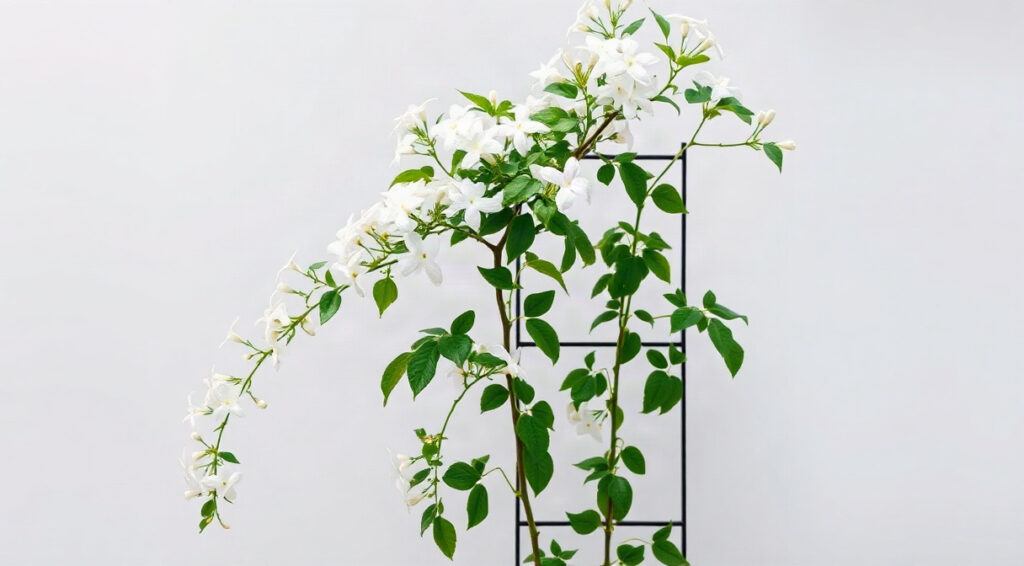
jasmine plant care indoor starts with matching a jasmine species to your room, then balancing bright light, evenly managed moisture, and a support for its climbing stems. With those basics in place, a jasmine can perfume a sunny window or conservatory and reward you with seasonal flowers instead of long, leafy growth alone.
Indoor success is not just about watering more or placing a pot beside any window. Jasmines differ in their flowering season, temperature preferences, and need for a cool resting period. This guide explains which types suit home growing, how to set a practical care routine, and how to solve common problems before buds drop.
jasmine plant care indoor: Find the Right Light and Spot
Most flowering jasmines need strong light to make buds. Set the plant close to an unobstructed east-, south-, or west-facing window, adjusting for the season and the intensity of direct sun. An east-facing window offers gentle morning rays; a south- or west-facing exposure usually provides more energy for flowering, but summer afternoon sun behind glass can scorch leaves. Start a newly purchased plant a little back from the glass and move it closer over a week.
Look at the plant, not only the compass direction. A vine that stretches toward the window, develops long gaps between leaves, or produces few flowers is probably short of light. Turn the pot a quarter turn every week so growth stays balanced. If winter days are dim, a full-spectrum grow light on a timer can supplement natural light. Keep it above the foliage and follow the manufacturer’s distance guidance rather than placing a hot bulb against leaves.
Air movement matters, but drafts do not help. Avoid a position directly over a radiator, beside a frequently opened exterior door, or in the path of strong air-conditioning. Heated air can dry leaves and buds quickly, while sudden cold drafts may trigger leaf drop. A bright room with steady conditions is generally better than a dramatic temperature swing from day to night. Do not let foliage press against cold window glass during winter.
Check the plant label before you settle on a permanent place. Jasminum sambac, commonly called Arabian jasmine, prefers warmth and bright light, while pink jasmine, Jasminum polyanthum, benefits from a cooler winter period to support its seasonal flowering cycle. A jasmine with healthy green leaves may still fail to bloom if it receives insufficient light or stays too warm when its type needs a rest. For an overview of houseplant growing conditions, consult according to Royal Horticultural Society.
- Give the plant the brightest suitable window available, then watch for scorching or stretching.
- Keep leaves clear of radiators and cold panes, and rotate the pot regularly.
- Use a grow light to extend useful winter light when natural daylight is weak.
For jasmine plant care indoor, consistent light is a stronger starting point than frequent feeding. Resist moving the pot from room to room to chase every small change in sun. Allow several weeks in one bright position, observe new growth, and adjust gradually if leaves pale, scorch, or stretch. A stable location helps the vine settle and makes changes in water needs easier to read.
Best Climbing Jasmine Varieties for Home Fragrance
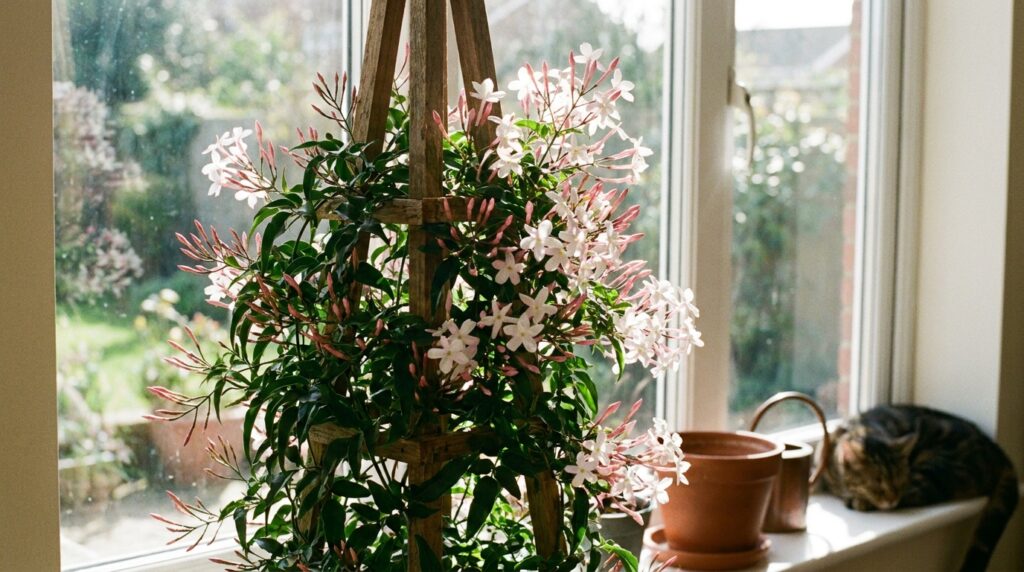
Choosing among climbing jasmine varieties is important because the familiar name jasmine covers plants with different habits. Pink jasmine, Jasminum polyanthum, is a vigorous twining vine with pink buds that open to white, sweetly scented flowers, often in late winter or spring. It can make a generous display on a small trellis, but its long stems need regular guiding. It commonly appreciates a cooler, bright winter rest before flowering; a continuously hot room can reduce its seasonal performance.
Arabian jasmine, Jasminum sambac, is a better choice if you want a warm-room plant with intensely fragrant white flowers. Depending on cultivar and growing conditions, it can flower intermittently through warm months. Look for compact named forms such as Maid of Orleans when space is limited. Sambac is usually more shrub-like than a naturally long climber, but young flexible stems can be trained onto a small hoop or support. It dislikes cold conditions and should not be left beside a chilly winter window.
Common jasmine, Jasminum officinale, is a vigorous twiner valued for its perfume and delicate leaves. It can be grown in a large, bright indoor space, but often wants more room and strong light than a typical shelf offers. Its growth may become unwieldy without pruning and a sturdy support. Before choosing it, consider the mature vine rather than the size of the starter pot; a small plant can develop lengthy shoots during an active season.
For an apartment, select a young plant with healthy leaves, several flexible stems, and no visible pests. Check whether the seller identifies the botanical species and expected flowering season. Plants sold simply as jasmine may have very different needs. North Carolina State Extension’s plant profile for pink jasmine, Jasminum polyanthum, offers a useful reference for identifying that species and understanding its growth habit.
- Choose pink jasmine for an abundant seasonal display if you can provide bright light and a cooler winter rest.
- Choose Arabian jasmine for a compact, warm-loving plant with potent floral fragrance.
- Choose common jasmine when you have room for a vigorous vine and can offer a substantial support.
These fragrant flowering vines are not interchangeable, so match the variety to your temperature, available space, and desired bloom timing. A young sambac may suit a warm living room, while polyanthum can be rewarding where a bright, cooler winter spot is available. Read the botanical name, ask about the plant’s recent growing conditions, and avoid buying a stressed specimen with limp stems or sticky leaves.
Before purchasing, check local guidance if you have pets or young children who may chew plants. Keep jasmine out of reach when there is uncertainty about a particular species, and ask a veterinarian or poison information service for advice if ingestion occurs. Also consider scent sensitivity: a heavily perfumed plant can be overwhelming in a small bedroom, so a ventilated living space may be more comfortable.
Watering, Potting Mix, and Feeding Without Guesswork
A reliable routine for jasmine plant care indoor begins with checking the potting mix rather than following a fixed calendar. In active growth, water thoroughly when the upper inch of mix feels dry, letting excess flow from the drainage holes. Then empty the saucer or decorative cachepot. The exact interval may be several days in a warm, sunny room or longer in cool, low-light conditions, so use the moisture check as your guide.
Jasmine roots need both moisture and oxygen. A pot with drainage holes is essential; standing water can deprive roots of air and encourage rot. Choose a quality indoor potting mix that drains freely while retaining some moisture. If the mix stays soggy for days, blend in a suitable aerating amendment such as perlite, or repot into a more open mix. Do not put a layer of gravel in the bottom as a substitute for drainage; it does not correct a dense mix or blocked holes.
When watering, wet the whole root ball until water exits the base. A small splash at the surface can leave deeper roots dry, while frequent tiny drinks keep the top damp and make it harder to judge moisture. If the mix has pulled away from the pot edges and water runs straight through, set the pot in a shallow basin for a short soak, then let it drain fully. Avoid leaving the plant standing in that water afterward.
Reduce watering as growth slows in winter, particularly for pink jasmine receiving a cooler rest. Do not let the root ball become bone dry for extended periods, but check the soil before each drink. Warm-grown Arabian jasmine may continue using water through the year, although shorter days still tend to slow its growth. A heavier pot, darker mix, and drooping leaves can be clues, but confirm the moisture level with a finger before deciding the plant is thirsty.
Feed only while the plant is actively growing. A balanced liquid houseplant fertilizer, diluted according to its label, can be applied every two to four weeks in spring and summer. Pause or reduce feeding during a cool resting period and when growth is weak. Too much fertilizer can produce soft leafy stems at the expense of flowers and may damage roots. Never apply concentrated feed to dry soil; water first if the mix is very dry.
- Feel the top inch of mix and assess the plant’s recent light and temperature.
- Water thoroughly only when that surface layer has begun to dry.
- Let the pot drain, then empty standing water from its saucer.
- Recheck sooner during warm, bright weather and less often in winter.
Humidity can help leaves look fresh, especially in a dry heated home, but misting is not a substitute for correct watering. A room humidifier or grouping plants can raise local humidity more steadily. Keep air moving gently and avoid leaving foliage wet overnight. For jasmine plant care indoor, the most common watering mistake is treating a drooping plant automatically with more water. Root damage can also cause wilting, so check the soil and roots before adding another drink.
Training, Pruning, and Repotting a Jasmine Vine
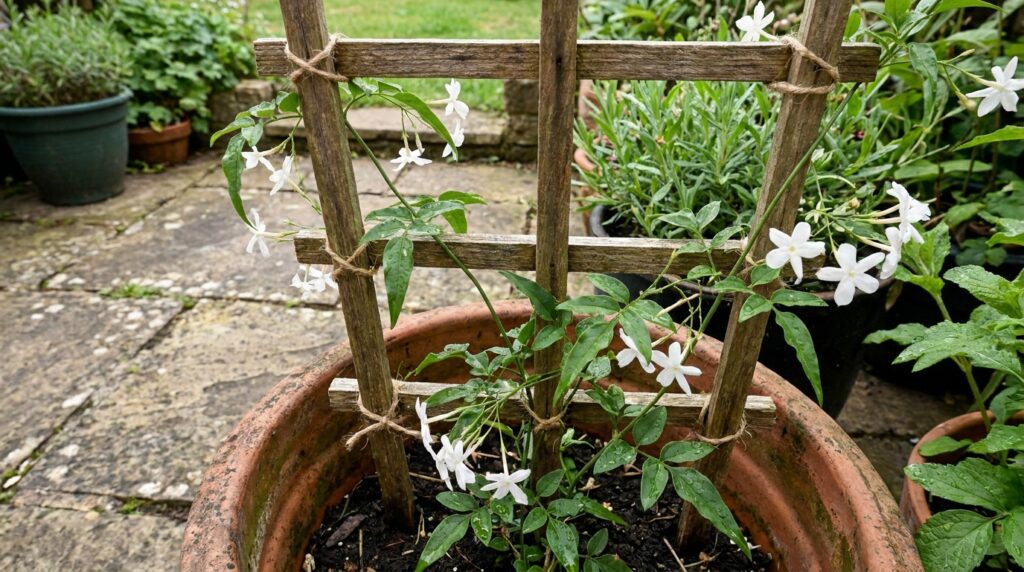
Give a climbing jasmine a support early, while its stems are flexible. A small fan trellis, circular hoop, or narrow obelisk can fit in a home without overwhelming the pot. Secure shoots loosely with soft plant ties, guiding them around the support rather than bending them sharply. Leave room for stems to thicken and air to move between leaves. A support that is too short quickly becomes frustrating when the vine sends out several long shoots.
Pink jasmine and common jasmine twine as they grow, so gently weave or tie new growth onto the frame. Arabian jasmine is less naturally vine-like, but light guidance can shape young branches on a hoop. Do not pull a mature, brittle stem into a tight curve; direct it gradually over several days or prune it back and train new growth. Check ties monthly and loosen any that are cutting into the stem.
Prune to control size, remove weak or dead growth, and encourage branching. For spring-flowering types such as pink jasmine, wait until flowering has finished before giving the plant a more substantial trim. Cutting off developing stems just before the bloom period may remove the buds you have been waiting for. Use clean, sharp snips and make cuts just above a healthy leaf node. Remove no more than about one-third of the plant at once unless you are correcting damaged growth.
Pinching the tips of young shoots during active growth can encourage a fuller framework, but stop pinching when you want the plant to form flower buds. Clean your pruners between plants, particularly if you are removing diseased or pest-damaged stems. Collect fallen petals and leaves from the pot surface; decaying material can hold moisture and hide insects. A tidy canopy also makes it easier to spot early signs of scale or spider mites.
Repot when roots circle densely around the root ball, emerge from drainage holes, or the mix dries unusually quickly despite appropriate care. Move up only one pot size, typically about one or two inches wider, rather than placing a small root system in a huge container. Excess soil can stay wet for too long. Repot in spring as growth resumes, using fresh, free-draining mix and keeping the root crown at its previous level.
- Install the trellis before the vine becomes tangled, and use loose ties.
- Prune spring bloomers after their flowers fade to preserve the next cycle of buds.
- Repot in spring only when roots or rapid drying show that the current pot is restrictive.
Training is part of the plant’s long-term care, not a one-time task. Spend a few minutes each week directing fresh shoots and checking ties. This keeps fragrant flowering vines within their allotted space and spreads leaves across the support so more of the plant receives light. A compact, open framework is easier to water, inspect, and bring closer to a window as seasons change.
Encouraging Blooms and Solving Common Indoor Problems
Flowers depend on the combined effect of light, the right seasonal temperature, plant maturity, and suitable pruning. If a jasmine grows leaves but does not bloom, first review its light exposure and species requirements. A plant far from a window may survive but lack the energy to flower. Pink jasmine may also need a cooler, bright period in winter, while Arabian jasmine generally prefers warmth. Avoid sudden changes; move the pot gradually and allow several weeks for a response.
Bud drop is often linked to abrupt shifts in conditions. A plant moved from a greenhouse into a hot, dry room may shed buds while adapting. Keep watering steady, avoid rotating it drastically once buds are set, and do not place it beside a radiator. Underwatering can dry buds; waterlogged roots can also prevent them from taking up water. Check the potting mix and drainage rather than assuming one cause from the symptom alone.
Yellow leaves can mean several things. Older leaves naturally age, but widespread yellowing with persistently wet soil can indicate overwatering or poor drainage. Yellowing paired with very dry mix may point to drought stress. Inspect leaf undersides for pests, and look for sticky residue, fine webbing, or small raised scales. Isolate an affected plant from other houseplants, then wipe leaves and stems gently or use an appropriate labeled treatment. Repeat inspections are important because one cleaning may not remove every pest stage.
Spider mites are more likely in warm, dry rooms and may cause fine stippling or delicate webbing. Scale insects can look like fixed brown bumps along stems, while aphids tend to cluster around soft new growth. Check weekly, especially where stems meet leaves. Wash foliage carefully if the species and potting setup allow it, shielding the soil as needed. Follow product labels closely, and test any treatment on a small area before treating the entire plant.
Use the following troubleshooting sequence rather than changing several conditions at once:
- Confirm the plant’s botanical name and flowering pattern.
- Check light, soil moisture, drainage, and recent temperature changes.
- Inspect leaf undersides and stems for insects, webbing, or sticky deposits.
- Make one measured adjustment, then observe new growth over the next few weeks.
Keep expectations realistic: a recently purchased plant may need time to adjust, and some varieties flower in a defined season rather than continuously. Stable care usually produces a better result than frequent feeding, heavy pruning, or repeated relocation. If you want to plan other seasonal color around a jasmine display, explore these purple flowers that bloom all summer for ideas suited to a garden border.
For a small-space growing setup, the light and container advice in these balcony garden ideas can also help you think through exposure and plant placement. Indoors, however, protect jasmine from extreme outdoor conditions when moving it between spaces. Acclimate it gradually to brighter light and bring it back inside before chilly nights if it spends warm weather outdoors.
With thoughtful jasmine plant care indoor, flowers are a reward for meeting the variety’s needs rather than a result of one special trick. Record when buds form, where the plant sits, and how often the soil dries. Those simple observations help you refine care from season to season and distinguish normal seasonal rest from a problem that needs attention.
Frequently Asked Questions
How many hours of light does indoor jasmine need?
Give most flowering jasmines several hours of bright light daily, with gentle direct sun where the leaves tolerate it. A bright east-facing window is a good starting point; stronger south or west exposures may work with gradual acclimation. If stems stretch or the plant makes leaves but no flowers, try a brighter position or supplement winter daylight with a grow light.
How often should I water a jasmine plant indoors?
There is no reliable fixed schedule for every room. Check the top inch of potting mix and water thoroughly when it begins to dry during active growth. Let excess drain away and empty the saucer. In winter or a cooler resting period, the mix may take longer to dry, so check less often rather than watering by the calendar.
Which climbing jasmine varieties are best for indoor fragrance?
Pink jasmine, Jasminum polyanthum, is a popular fragrant climber for a bright home that can provide a cooler winter rest. Common jasmine, Jasminum officinale, offers classic scent but needs space and strong light. Arabian jasmine, Jasminum sambac, is notably fragrant and more compact, though it is generally trained as a small shrub rather than a vigorous twining vine.
Why is my indoor jasmine not flowering?
Insufficient light is a frequent cause, but variety, temperature, plant maturity, and pruning timing matter too. Confirm the plant’s species and seasonal needs, then place it in brighter light without exposing it suddenly to harsh sun. Avoid heavy feeding and wait until spring flowers have finished before pruning a spring-blooming jasmine.
Can I grow jasmine in a bedroom?
Yes, if the room has suitable bright light and stable temperatures. Strongly scented flowers may be too intense for some people in a small, closed bedroom, so a ventilated living space may be a better location. Keep the plant away from hot radiators and cold drafts, and consider household safety if pets or children may chew the leaves.
When should I repot an indoor jasmine?
Repot in spring when roots circle the pot, emerge from its drainage holes, or the mix dries unusually fast. Choose a container only one size larger, with drainage holes, and use a fresh, free-draining potting mix. A pot that is much too large holds excess moisture around a small root system and can increase the risk of root problems.
Bring Home the Right Jasmine
Choose a jasmine suited to your room, provide bright light, water according to soil moisture, and guide new stems before they tangle. With a little seasonal observation, jasmine plant care indoor becomes a manageable routine that supports healthy foliage and fragrant blooms. Explore more practical growing inspiration at Blossom Gardens Hub, then choose the jasmine that best fits your home.
