
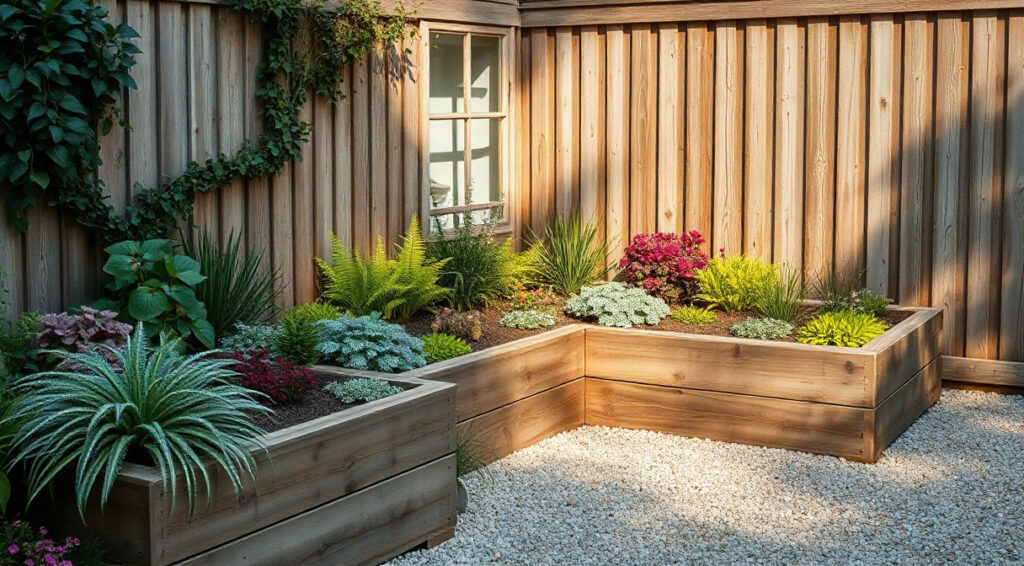
Corner garden bed ideas are the secret weapon every home gardener needs to unlock the full potential of awkward boundary spaces. Those neglected corners where lawns meet fences, where walls intersect, and where sunlight seems to disappear often become wasted real estate in residential gardens. Yet with thoughtful planning, strategic construction, and creative styling, these challenging zones can become the most productive and visually striking areas of your outdoor space.
Whether you’re dealing with a sunny front-yard intersection, a shaded backyard nook, or a narrow side-return between properties, this complete guide will walk you through everything you need to know. From selecting materials and understanding drainage to choosing plants that thrive in corner conditions, you’ll discover how to turn boundary limitations into design advantages. For more inspiration on maximizing every inch of your garden, visit our comprehensive resource at Blossom Gardens Hub for corner garden bed ideas that suit every space and budget.
1. Assessing Your Corner Space: The Foundation of Success
Before breaking ground on any corner transformation, thorough assessment prevents costly mistakes and ensures your garden bed flourishes for years. Every corner presents unique challenges and opportunities that demand careful analysis.
Understanding Light Patterns and Microclimates
Corners create distinctive microclimates that differ dramatically from open garden areas. South-facing corners often become heat traps with intense reflected light from adjoining walls or fences, while north-facing corners may remain perpetually cool and damp. East-facing corners enjoy gentle morning sun but afternoon shade; west-facing corners endure harsh afternoon exposure.
Track your corner’s light conditions across multiple days, noting:
- Total hours of direct sunlight versus dappled shade
- Intensity patterns during peak summer months
- Seasonal variations as the sun’s path changes
- Areas of permanent shadow cast by buildings, trees, or boundaries
This observation period, ideally spanning several weeks across different seasons, informs every subsequent decision from bed orientation to plant selection. according to RHS Garden Design, understanding these microclimatic variations is essential for creating gardens that thrive rather than merely survive.
Evaluating Soil Conditions and Drainage
Corner positions frequently suffer from poor drainage due to converging surface water from multiple directions. Test your soil’s drainage capacity by digging a hole 30cm deep, filling it with water, and timing how long it takes to drain. Standing water after 24 hours indicates drainage problems requiring raised bed intervention.
Additionally, assess:
- Soil composition: Sandy, clay, loam, or chalky substrates each demand different approaches
- pH levels: Corner areas near concrete foundations often show elevated alkalinity
- Compaction: Heavy foot traffic at path intersections creates impenetrable layers
- Contamination risk: Older properties may have lead paint residue or treated timber leachate near boundaries
Measuring and Mapping for Precision
Accurate measurements enable efficient material ordering and proportional design. Record the angle of your corner—not all are perfect 90 degrees. Measure available depth from the boundary, noting any obstacles like drainage pipes, utility access points, or overhanging eaves that restrict height.
Photograph your corner from multiple angles during different times of day. These visual references prove invaluable during the design phase when you’re working with plans rather than the actual space.
2. Designing Your Corner Garden Bed: Layout Strategies That Work
Effective corner garden bed ideas begin with intelligent layout decisions that respect the geometry of your space while creating visual harmony with the broader garden design.
The Classic L-Shaped Garden Bed Layout
The L-shaped garden bed layout represents the most intuitive response to corner geometry, following the natural lines of converging boundaries. This configuration maximizes planting area while maintaining clear access points and visual flow.
When designing your L-shaped garden bed layout:
- Arm proportions: Keep both arms of the L visually balanced, though exact lengths can vary based on available space
- Corner treatment: Soften the internal angle with curved plantings or a focal specimen to prevent a harsh geometric intersection
- Width considerations: Maintain 60-90cm width for easy maintenance access; wider beds require stepping stones or internal paths
- Height transitions: Gradually step down heights from the corner apex toward the open garden for natural perspective
Raised Bed Corner Design Principles
Raised bed corner design elevates your planting surface above grade level, solving multiple corner-specific challenges simultaneously. These structures improve drainage in waterlogged corners, warm soil earlier in spring, and create comfortable working heights that reduce physical strain.
Key raised bed corner design considerations include:
- Structural integrity: Corners bear concentrated soil pressure; use reinforced jointing methods
- Material thermal properties: Metal heats rapidly but cools quickly; wood insulates moderately; stone provides thermal mass
- Height optimization: 30-45cm suits most vegetables and ornamentals; 60cm+ accommodates root crops and seated gardening
- Base preparation: Permeable membranes prevent soil loss while allowing drainage
For wheelchair-accessible or seated gardening, design your raised bed corner design with 75cm height and 60cm reach depth from all accessible sides.
Curved and Angular Alternatives
Not all corner garden bed ideas must follow straight lines. Curved beds flowing from corners into open lawn areas create organic, naturalistic gardens. Alternatively, geometric polygon shapes—triangles, pentagons, or octagons—planted into corners make bold contemporary statements.
When selecting non-rectangular forms, consider:
- Increased edge-to-area ratios requiring more materials and maintenance
- Custom cutting requirements for sleepers, bricks, or stone
- Irrigation complexity with irregular perimeters
- Visual relationship to existing garden architecture
3. Building Your Corner Bed: Construction Methods and Materials
Transforming your design into reality demands appropriate construction techniques matched to your chosen materials, skill level, and budget.
Timber Construction Techniques
Wood remains the most accessible material for DIY raised bed corner design, offering natural aesthetics and manageable weight. Pressure-treated softwood provides cost-effective durability, though naturally rot-resistant hardwoods like oak, chestnut, or black locust offer longevity without chemical treatments.
Construction essentials:
- Use minimum 5cm thick boards for structural stability
- Install vertical posts at corners and 1.2m intervals along runs
- Secure with galvanised bolts or structural screws, never nails alone
- Line interior with permeable landscape fabric to extend timber life
- Apply food-safe preservative if growing edibles
For an L-shaped garden bed layout using timber, mitre internal corners at 45 degrees or but joint with reinforced corner posts. The corner junction bears maximum pressure from soil expansion and contraction.
Masonry and Stone Options
Brick, block, and stone constructions offer permanence and thermal mass beneficial for Mediterranean or heat-loving plantings. Dry-stone walling creates wildlife-friendly crevices; mortared constructions provide maximum stability.
Critical masonry considerations:
- Foundation requirements: All masonry needs 15-20cm compacted hardcore base
- Damp-proofing: Separate porous stone from saturated soil with membrane barriers
- Cavity drainage: Weep holes prevent water pressure buildup behind walls
- Coping protection: Cap stones shed water and protect wall integrity
Metal and Modern Materials
Corten steel, galvanised corrugated iron, and recycled plastic offer contemporary alternatives with distinct advantages. Corten develops protective rust patinas; galvanised steel provides bright, clean aesthetics; recycled plastic promises decades of maintenance-free service.
When specifying metal for raised bed corner design:
- Account for thermal conductivity—roots may overheat in exposed southern corners
- Insulate with timber capping or internal lining for temperature-sensitive plantings
- Specify appropriate gauge—1.5mm minimum for structural integrity
- Consider reflective properties; bright metals intensify light on adjacent plants
Drainage and Irrigation Integration
Corner positions concentrate water flow, making drainage planning essential. Install French drains behind retaining walls, or incorporate weep pipes through masonry. For automated irrigation, position drip lines to compensate for corner shadow patterns where evaporation differs from open areas.
4. Styling Your Corner Garden: Plant Selection and Arrangement
The most beautifully constructed corner garden bed ideas fail without thoughtful planting that responds to corner-specific conditions while creating visual impact.
Layered Planting Strategies
Effective corner plantings employ vertical layering to maximize the three-dimensional potential of boundary intersections. This approach creates depth, hides structural elements, and provides habitat diversity.
Your layered framework:
- Canopy layer: Small trees or large shrubs at the corner apex, positioned to frame rather than block views
- Understory: Medium shrubs providing structure and seasonal interest
- Herbaceous layer: Perennials and grasses offering movement and color transitions
- Ground cover: Mat-forming plants suppressing weeds and unifying the composition
- Climbing elements: Vertical coverage of boundary fences or walls
Sun-Loving Corner Solutions
South and west-facing corners suit Mediterranean, prairie, and tropical planting schemes. These heat-reflecting positions excel with:
- Structural succulents: Agaves, sedums, and echeverias in gravel-mulched schemes
- Fragrant herbs: Lavender, rosemary, and thyme thriving in reflected warmth
- Drought-tolerant grasses: Stipa, panicum, and pennisetum providing movement
- Sun-tolerant climbers: Trachelospermum, clematis montana, or ornamental vines
Shade-Tolerant Corner Plantings
North and east-facing corners, or those shaded by buildings, demand plants evolved for low-light conditions. These spaces can become lush, tranquil retreats with appropriate selection.
Reliable shade performers for corner garden bed ideas:
- Foliage textures: Hostas, ferns, and heucheras creating layered tapestries
- Winter interest: Hellebores, sarcococca, and mahonia providing cold-season structure
- Spring bulbs: Woodland anemones, erythroniums, and narcissi naturalising beneath deciduous canopy
- Moisture lovers: Astilbes, rodgersias, and primulas where corners remain damp
Edible Corner Gardens
Raised bed corner design particularly suits food production, offering controlled soil conditions and ergonomic harvesting heights. Position taller crops—tomatoes, beans, or small fruit trees—at the back, with lower vegetables and herbs forward.
Productive corner combinations:
- The Mediterranean kitchen: Tomatoes, basil, peppers, and oregano in sun-trapping corners
- The salad corner: succession-sown lettuce, radish, and spinach in cool, moist positions
- The berry boundary: Cane fruits trained along fences with strawberries cascading front edges
- The herb spiral: Vertical variation creating multiple microclimates in compact corners
Year-Round Structure and Seasonal Highlights
Sustainable corner garden bed ideas maintain interest across all seasons. Include evergreen backbone plants—box, yew, or holly—for winter structure, punctuated with spring bulbs, summer perennials, autumn berries, and winter-barking stems.
5. Advanced Styling: Making Corners Focal Points
Elevated corner garden bed ideas transcend mere functionality to become deliberate design features that draw the eye and invite exploration.
Creating Visual Termination
In garden design theory, corners naturally terminate sightlines. Exploit this by placing compelling focal elements—sculptural plants, water features, or artistic installations—at these terminal points. A multi-stemmed silver birch, weathered stone basin, or contemporary metalwork transforms an awkward corner into a deliberate destination.
Mirror and Echo Techniques
Where multiple corners exist in a garden, repeating similar plantings or features creates rhythm and cohesion. Alternatively, contrasting treatments—one sun-drenched Mediterranean corner opposing a cool woodland nook—generate dynamic tension and diverse experiences within limited space.
Lighting for Evening Extension
Corner positions often receive dramatic raking light at dawn and dusk. Enhance this with deliberate lighting design:
- Uplighting: Ground-mounted fixtures washing canopy trees against boundary walls
- Shadow play: Backlighting ornamental grasses or ferns for kinetic patterns
- Path integration: Recessed step lights guiding navigation around corner beds
- Submerged illumination: Waterproof fixtures in corner water features
Hardscaping Integration
Seating, paving, and decorative aggregates extend corner garden functionality. A curved bench nestled into an L-shaped garden bed layout creates intimate enclosure. Gravel mulches in complementary tones unify planting areas with adjacent terraces.
Vertical Exploitation
Corners offer unique vertical opportunities. Freestanding trellises, espalier wires on boundary walls, or green wall systems multiply effective growing area in space-restricted situations. Choose vertical systems appropriate to your corner’s light and access conditions.
Frequently Asked Questions
What is the best height for a raised bed corner design?
The optimal height depends on your primary goals and physical needs. For general gardening with good underlying soil, 30-45cm provides sufficient root depth for most plants while minimising material costs. For areas with contaminated or compacted subsoil, 60cm ensures completely independent growing medium. If accessibility is a priority—whether for wheelchair users, those with limited mobility, or simply comfortable seated gardening—75cm allows working from a standard chair height. Remember that taller beds require more soil to fill and may dry out faster in exposed corner positions, so incorporate water-retentive organic matter into your growing medium.
How do I prevent my L-shaped garden bed layout from looking too angular and harsh?
Softening the geometry of an L-shaped garden bed layout involves multiple techniques working together. First, curve the internal corner rather than maintaining a sharp 90-degree angle— even a gentle arc breaks the rigid geometry. Second, plant rounded, mounding forms at strategic points: spherical boxwoods, cascading geraniums, or billowing ornamental grasses all counteract linear edges. Third, allow plants to spill over bed boundaries slightly, blurring the transition between hard structure and soft planting. Fourth, vary heights along both arms of the L so your eye travels rather than stopping at the corner junction. Finally, consider a focal specimen—perhaps a sculptural Japanese maple or elegant obelisk—positioned at the internal angle to draw attention away from the geometric intersection.
Which materials last longest for corner garden bed construction?
Longevity varies dramatically by material and environmental exposure. Natural stone, properly constructed with adequate foundations and drainage, potentially lasts centuries and improves aesthetically with weathering. Hardwood timbers like oak, sweet chestnut, or black locust offer 15-25 years untreated due to natural decay resistance; softwoods with modern pressure treatment achieve 10-15 years. Metal options present trade-offs: galvanised steel resists corrosion for 20+ years but may zinc-coat adjacent soil; Corten steel develops protective patina lasting decades though initial rust runoff stains surrounding surfaces. Recycled plastic promises 50+ years without maintenance but lacks natural material warmth. For most residential applications, hardwood with occasional preservative renewal offers optimal longevity-cost-aesthetics balance.
Can I build corner garden beds against my house walls?
Building directly against house walls requires careful attention to moisture management and structural protection. Maintain minimum 15cm clearance between any raised bed and external walls to prevent damp penetration—more if your walls have vulnerable finishes like render or timber cladding. Install impermeable membranes between soil and walls, ensuring they drain away from the building. Keep bed height below internal floor level where possible, and never bridge existing damp-proof courses. For substantial raised bed corner design against buildings, consult a structural surveyor, as saturated soil exerts significant lateral pressure. Many experienced gardeners prefer freestanding beds positioned slightly away from walls, allowing air circulation and easy maintenance access while avoiding potential building damage.
How do I improve drainage in a naturally waterlogged corner?
Waterlogged corners demand systematic intervention rather than simple surface treatments. Begin with French drain installation: excavate trenches 60cm deep along both converging boundaries, backfilling with perforated pipe wrapped in geotextile and surrounded by coarse gravel, ensuring outfall to suitable discharge points. For severely problematic areas, connect to soakaways or surface water drains with appropriate permissions. Above this drainage infrastructure, construct raised bed corner design bringing root zones well above saturated levels—45cm minimum, preferably 60cm. Incorporate 30-40% coarse organic matter or horticultural grit into your growing medium to improve percolation. Finally, select plants tolerant of moisture while the system establishes: astilbes, ligularias, and moisture-loving irises bridge the transition period. Monitor and adjust for two full seasons as drainage patterns stabilise.
What are the best low-maintenance corner garden bed ideas for busy homeowners?
Low-maintenance corner garden bed ideas prioritise structural planting over seasonal bedding and incorporate systems reducing ongoing intervention. Choose slow-growing evergreen shrubs requiring minimal pruning: sarcococca, skimmia, or dwarf rhododendrons in acidic corners; lavender, cistus, or euphorbias in alkaline, free-draining situations. Underplant with ground-covering perennials that exclude weeds once established: geranium macrorrhizum, epimediums, or japanese anemones. Install drip irrigation on timers, particularly valuable for corner positions that may be awkward to reach with hoses. Apply 5-7cm organic mulch annually, suppressing weeds while slowly feeding soil. Gravel mulches offer longer-lasting, lower-fertility options for Mediterranean schemes. Finally, design generous bed widths accessible from edges only, eliminating the need to step into beds and compact soil.
How do I make a small corner garden bed appear larger?
Visual expansion of compact corner spaces employs classic design illusions. Paint boundary fences or walls in soft, receding colours—pale blues, greens, or warm whites—rather than bold tones that advance visually. Use fine-textured foliage plants whose small leaves create impression of depth: ferns, bamboo, or birch rather than large-leaved tropicals. Position larger plants at the corner apex with progressively smaller specimens toward open edges, exaggerating perspective. Incorporate mirrors or highly polished metal surfaces to reflect planting and effectively double apparent space. Design curved rather than straight bed edges, as curves suggest continuation beyond visible boundaries. Finally, maintain crisp edges and weeded surfaces; untidy, overgrown corners feel cramped while manicured precision expands perceived order and space.
Conclusion: Transform Your Boundaries Into Garden Highlights
Corner garden bed ideas offer extraordinary potential to reclaim neglected spaces and transform them into productive, beautiful garden features. Through thoughtful assessment of your specific conditions, intelligent layout choices whether L-shaped garden bed layout or alternative configurations, quality construction in appropriate raised bed corner design, and styling that responds to light, moisture, and aesthetic goals, those awkward boundary intersections become opportunities rather than problems.
The most successful corner transformations embrace rather than fight their unique conditions. Sunny, heat-trapping corners celebrate Mediterranean abundance; damp, shaded corners cultivate woodland tranquility. Each boundary intersection tells a different story depending on orientation, surrounding architecture, and your personal gardening aspirations.
Begin with one corner this season, implementing the assessment and design principles outlined here. As confidence and success build, extend your approach around the garden perimeter, creating a cohesive network of purposeful plantings that maximises every available growing space. The journey from awkward emptiness to thriving abundance rewards patience with perpetual harvest—whether of flowers, foliage, food, or simply the profound satisfaction of garden-making.
For ongoing inspiration, detailed planting guides, and seasonal reminders tailored to your growing region, explore the complete resources at Blossom Gardens Hub. Your corner garden transformation starts with a single measured step into that neglected space, imagining what might flourish there with your care and creativity.
