
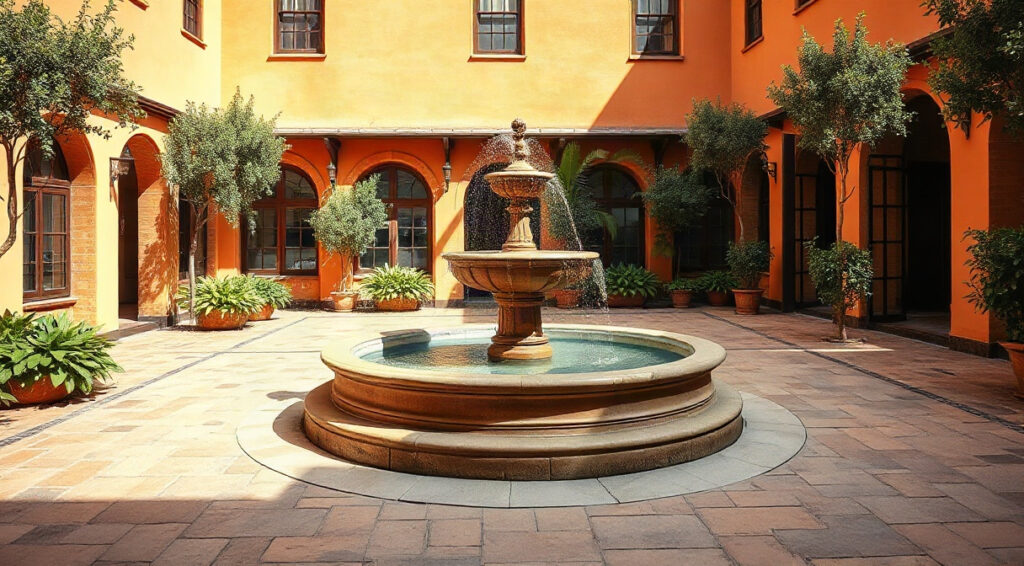
Courtyard garden design can turn an enclosed outdoor space into a calm, practical retreat, even when the plot is small, shaded or overlooked. The secret is to plan the room before choosing plants: decide where people will sit, how they will move through the space, and which materials will suit your local weather. Mediterranean inspiration brings warm stone, restrained planting and a gentle water sound, but a successful courtyard in the UK or US should respond to its own rainfall, winter temperatures and summer heat.
This guide explains how to shape the layout, choose hard landscaping, plant for changing conditions and integrate water without creating unnecessary maintenance. The ideas work for a city patio, a walled garden or a narrow side court, with practical adjustments for both cooler and warmer climates.
1. Plan a Courtyard Garden Design Around Proportion and Use
Begin by measuring the enclosed space, including door swings, steps, drain covers and the width of any access route. Sketch the outline to scale, then mark the areas that receive morning sun, midday sun and afternoon shade. A courtyard can feel cramped when every edge is filled with pots and furniture, so protect a clear central area or a direct route between the house and the garden gate. This simple plan is the foundation of useful courtyard garden design, not an afterthought once paving is installed.
Next, decide on one primary use and one secondary use. A dining courtyard might also accommodate a small herb collection; a quiet reading space could include a compact fountain. Trying to fit dining, lounging, storage, cooking and a large water feature into a tiny footprint usually makes each function less comfortable. Measure furniture before buying it. Allow about 90 centimetres for a main walking route where possible, and leave enough room to pull chairs back without blocking a doorway.
Choose a focal point that can be seen from indoors. It might be a clipped bay tree, a sculptural pot, a wall-mounted fountain or a simple bench backed by evergreen planting. In a long, narrow courtyard, position the focal point at the far end to draw the eye through the space. In a nearly square court, an off-centre feature can make the layout feel less static. Avoid placing a tall, solid object directly in front of the only window, where it may block light and make the room beyond feel smaller.
Use geometry without making the space rigid
Mediterranean courtyards often use clear geometry: a central paved area, repeated planters and a strong line of sight. Borrow the order, then soften it with planting. A square paving module can be balanced by loose thyme, a small multi-stem tree or a curved bench. In a narrow plot, diagonal paving can create movement, but too many angles add visual noise. Repeat one or two shapes rather than introducing a new pattern for each feature.
For courtyard garden design in the UK, assess how much direct sun walls actually reflect. A south-facing brick court may be warm and bright, while a north-facing enclosure can remain damp and cool. In many US regions, intense afternoon sun and reflected heat from masonry are the bigger challenges. Track light over a typical day in late spring, and note where shadows fall in winter if the space is used year-round.
- Mark mature plant widths on the plan, not just the pot size at purchase.
- Keep utilities, drains and access panels reachable without moving heavy features.
- Choose one principal focal point and keep the remaining elements visually quieter.
For design principles on circulation, views and structure, review according to RHS Garden Design. If a courtyard has a change in level, the same early planning matters: terrace proportions and safe transitions are covered in these practical sloped garden terrace ideas. Thoughtful proportions make the finished space feel composed rather than crowded.
2. Choose Hard Landscaping for Character and Climate
Hard landscaping sets the visual temperature of a courtyard. Pale limestone, buff sandstone and warm-toned porcelain can suggest a Mediterranean courtyard style, while reclaimed brick or darker slate creates a more traditional or contemporary mood. Compare full-size samples outside and view them when wet as well as dry. Small samples can hide strong colour variation, surface texture and glare. In a confined space, a restrained palette of one main paving material and one contrasting detail usually looks more elegant than several competing finishes.
Material choice must also reflect climate and use. In the UK, frequent rain makes drainage, slip resistance and algae management important. In colder US regions, freeze-thaw cycles can damage porous stone or poorly installed paving; select products rated for local conditions and install them over a suitable, well-compacted base. In hot, sunny parts of the US, very dark paving can become uncomfortable underfoot, while highly polished pale stone may create glare. Ask suppliers about outdoor ratings and maintenance requirements rather than choosing by appearance alone.
Set out the finished paving level before work begins. Surfaces should fall gently away from the building so rain does not collect beside foundations or run into the house. The exact fall and construction layers depend on the surface, soil and local drainage rules, so consult a qualified installer for complex sites. Do not assume that a permeable joint automatically makes an entire patio permeable: the sub-base and route for excess water matter too.
Make walls, edges and thresholds part of the design
Walls are a major visual asset in an enclosed garden. A limewashed or light-coloured wall can lift a shady court, while a brick wall can provide a warm backdrop for silver foliage. Before painting or attaching trellis, check that the masonry is sound and suitable for the treatment. Use freestanding screens where drilling would damage historic brickwork or a waterproofed surface. A narrow ledge can support small pots, but keep heavy containers stable and avoid obstructing air bricks, vents and drains.
Edges make the difference between a designed courtyard and a collection of surfaces. Slim metal edging can separate gravel from planting; brick soldier courses can frame a paved zone; a low stone kerb can hold soil in a raised bed. For gravel, select a grade comfortable to walk on and use a properly prepared base and edge restraint. These gravel path edging ideas offer useful ways to contain loose material cleanly.
In a small space, repeat paving lines into a path or continue the same stone onto a step to make the area appear larger. Keep joint widths and laying patterns consistent. A common mistake is to mix several stones because each looks attractive in isolation; together, their undertones may clash and make the courtyard feel busy. Instead, introduce contrast through planting, one accent material or a painted door.
- Choose a main surface that suits climate, drainage and the way you use the garden.
- Test samples on site in daylight, rain and shade before committing.
- Confirm finished levels, water run-off and step heights before installation.
Good surfaces should be beautiful, but they also need to be safe and straightforward to maintain. The right combination of paving, wall finish and restrained detailing gives the planting room to stand out.
3. Build Mediterranean Planting That Suits Your Region
Mediterranean-inspired planting is about texture, scent and seasonal rhythm, not simply importing plants associated with hot, dry coastlines. A useful mediterranean courtyard style combines evergreen structure with a few flowering accents and herbs near a path or seating area. In a UK garden, damp winters and limited winter light may rule out some tender choices outdoors. In the US, hardiness varies sharply between regions, and a plant that thrives in California may fail in a cold northern courtyard. Match selections to local conditions before committing.
Start with the site. Check sun exposure, wind movement, soil depth and how quickly containers dry. Courtyard walls can shelter plants from wind, but they can also trap heat and reduce air circulation. A sunny, sheltered bed may support rosemary, lavender or compact cistus in suitable regions; a damp, shaded court may be better suited to ferns, hellebores and shade-tolerant evergreen shrubs. Keep mature size in mind: a plant that reaches two metres can quickly overwhelm a narrow bed.
Layer plants at three heights
Use a small tree or tall shrub as the upper layer, mid-height plants for seasonal body, and low groundcovers or herbs to soften edges. A multi-stem olive can be a striking feature where the climate permits, but it may need winter protection in colder UK areas and is not reliably hardy in many US zones. For a more resilient structure, consider bay laurel in a container that can be sheltered, or a locally hardy small tree suited to the space. Check final height and root behaviour before planting near walls or drains.
For the middle layer, compact lavender cultivars such as Lavandula angustifolia ‘Hidcote’ provide flower colour and fragrance in a sunny, well-drained position. Space plants according to their mature spread rather than squeezing them together for instant fullness. In a humid or wet site, lavender often fails because roots stay saturated; improve drainage or choose a better-adapted plant instead. In a shadier courtyard, Japanese forest grass or a suitable fern can bring movement without demanding full sun.
Use thyme, oregano and chives close to paths where their leaves can release scent when brushed. Avoid edible herbs beside a fountain if splashing water is treated with chemicals that are not suitable for edible plants. In containers, use a free-draining mix suited to the species and check moisture more often during hot weather. Pots dry faster than beds, especially when placed against a sunny wall.
For a pollinator-friendly flowering layer, choose plants that suit your region and bloom at different times. A small group of nectar-rich perennials is often more effective than a single showy specimen. See this guide to bee-friendly garden plants for a longer flowering season. To create a balanced planting plan, repeat a few species in groups rather than scattering one of everything across the court.
- In March or April, remove dead growth and refresh the surface of containers as local weather allows.
- Plant hardy perennials in spring or early autumn, giving roots time to establish before extremes.
- In autumn, move tender container plants to a protected position before damaging frost.
Water new plants deeply while they establish, then adjust frequency to rainfall, soil and container size. A common mistake is to water every plant on the same schedule; drought-tolerant herbs and moisture-loving shade plants have different needs. Courtyard garden design works best when plant choices reflect the actual microclimate rather than an idealised holiday image.
4. Integrate Courtyard Water Features Safely and Beautifully
Water adds sound, movement and reflected light, all valuable qualities in an enclosed space. Courtyard water features can be as simple as a bubbling bowl or as architectural as a wall-mounted spout feeding a shallow basin. In a small court, a contained, recirculating feature is often more practical than a pond. Choose the scale carefully: the feature should be visible from the house and seating but leave comfortable circulation space around it.
Before choosing a fountain, decide what role it should play. A gentle trickle can soften traffic noise, while a stronger cascade may dominate conversation in a compact patio. Listen to the pump in a store or view a working example if possible. Check whether replacement parts and cleaning access are available. A concealed reservoir can keep the appearance neat, but it still needs a secure cover and access for inspection.
Plan power, drainage and water quality
Electrical pumps should be installed with suitable outdoor protection by a qualified electrician, following local codes and the manufacturer’s instructions. Do not run indoor extension leads across a wet patio. Consider the route from the power source, how the pump can be isolated for maintenance and whether a solar unit receives enough direct sun. Solar pumps can reduce wiring needs, but their flow may vary with cloud cover and may not suit every fountain design.
Use a stable, level base and make sure the feature will not discharge water toward a doorway, foundation or neighbouring property. Splashing can gradually stain stone, erode soil or leave nearby paving slippery. A common error is to place the fountain right beside a wall without checking splash distance. Test the flow and adjust the nozzle or water level before planting close around it.
In cold UK winters and freezing US regions, standing water can freeze and damage bowls, pipes or pumps. Follow the feature maker’s winter guidance: this may mean draining the basin, removing the pump and storing it in a frost-free place. In hot climates, evaporation can be rapid, so check the reservoir regularly and use a design that is easy to top up. Water restrictions may apply in some areas; a small recirculating system generally uses less water than a continuously refreshed one, but still needs sensible maintenance.
Prevent leaves and debris from clogging the pump by choosing a position away from heavy leaf fall or using a suitable filter. Clean the basin as directed and do not add treatments unless they are appropriate for that feature and any wildlife that may visit. If you want birds to drink or bathe, provide a shallow, easily cleaned dish separate from a deep or treated fountain. Keep the water depth and access safe for children and pets.
In courtyard garden design, placement matters as much as the object itself. Set a feature where its sound can be enjoyed without making a tight passage narrower. Pair it with a low, textured planting edge rather than enclosing it in tall foliage that hides the water and traps debris. Repeat the basin’s material or shape elsewhere, perhaps in a planter or a paving detail, to make the feature feel integrated.
- Choose a pump suited to the fountain’s height and desired flow.
- Provide reachable access for cleaning, seasonal draining and pump removal.
- Check splash, overflow and electrical safety before surrounding the feature with plants.
A modest, well-maintained fountain can contribute more atmosphere than an oversized installation. The goal is a quiet, reliable focal point, not a complicated system that becomes difficult to clean.
5. Finish the Courtyard for Comfort and Year-Round Use
The finishing details turn a visually pleasing courtyard into a space people use. Choose seating that suits the footprint: a built-in bench can make efficient use of a narrow edge, while two lightweight chairs offer flexibility in a more open square. Place seating where it receives welcome sun or shade at the time you are most likely to use it. In a hot US region, a shaded seat and light-toned paving may be essential; in a cool UK garden, a sunny wall can extend spring and autumn use.
Outdoor lighting helps the courtyard remain legible after dusk. Use a modest combination of low-level path lighting, a discreet wall light and, if appropriate, a soft accent on a focal tree or water feature. Avoid glare into neighbouring windows and keep cables and fittings suitable for outdoor exposure. A bright light aimed directly at a pale wall can flatten the planting and make the space feel harsh. Warm, restrained illumination usually preserves the calm atmosphere better than multiple high-output fixtures.
Keep storage and maintenance in the original plan
Courtyards have limited room for tools, cushions and watering equipment. Include a narrow storage bench or a weatherproof cupboard if the layout permits, and make sure it does not block a route or cover a drain. Choose containers with drainage holes and stable bases. Large pots are visually grounding but heavy to move, so decide on final positions before filling them. Use pot feet where suitable to prevent water from sitting beneath containers and to help protect paving.
Plan a maintenance routine based on the materials and plants. Sweep leaves from paving before they become slippery, clear drainage channels after storms and inspect the fountain pump at the interval recommended by its maker. In spring, check for loose joints and winter damage. In summer, water containers according to their actual moisture needs; in autumn, remove diseased foliage and prepare vulnerable plants for cold weather.
Resist the urge to fill every empty surface immediately. A newly installed courtyard can look sparse for a season, but mature shrubs and climbers need breathing room. Planting too densely often leads to poor airflow, extra pruning and hidden damp against walls. Use a trellis or wall-trained climber only after confirming the wall is sound and the species is suitable. A carefully chosen jasmine can bring fragrance, but variety and winter hardiness matter; learn more about jasmine care and growing conditions before selecting one for a sheltered space.
For dependable results, stage the work in a practical order:
- Measure, observe sun and mark utilities, drainage and access.
- Resolve levels and drainage before laying paving or installing a fountain.
- Install the main hard landscaping and test the water feature.
- Add larger trees and shrubs, then fill the remaining beds and containers.
- Finish with seating, lighting and small details after circulation is clear.
Make adjustments for local building rules, frost exposure, water availability and the structure of existing walls. When the project involves major excavation, electrical work or drainage changes, seek a qualified local professional. The most enduring courtyard garden design balances a distinctive focal point with easy movement, climate-appropriate materials and planting that can mature gracefully.
The Royal Botanic Gardens, Kew publishes further plant care guidance worth reading alongside this guide.
Frequently Asked Questions
How do I make a small courtyard look larger?
Keep the paving palette simple, maintain a clear route and draw the eye toward one focal point. Repeating a material or plant at the far end can create continuity. Avoid filling every corner with large containers or furniture.
Can Mediterranean plants grow in a UK courtyard?
Some can, especially in a sunny, sheltered position with well-drained soil, but damp winters and frost affect plant choice. Lavender and rosemary may suit suitable sites; check the cultivar’s hardiness and drainage needs before planting.
What is the easiest water feature to maintain?
A small, recirculating bowl with an accessible pump is usually straightforward. Choose a model that is easy to drain and clean, protect it from heavy debris and follow the maker’s winter instructions for your climate.
How much space should I leave for a courtyard path?
Around 90 centimetres is a useful target for a main route where the footprint allows, though a smaller site may require careful compromises. Keep doorways, steps and access to drains unobstructed.
Which paving is best for a courtyard in a freezing climate?
Choose a product rated for outdoor use and local freeze-thaw conditions, then install it over a suitable base with effective drainage. Ask the supplier or installer about slip resistance and maintenance for your specific site.
How often should I top up a courtyard fountain?
Check the reservoir regularly, especially during hot, dry weather when evaporation and splash can lower the level quickly. Follow the manufacturer’s guidance and never allow a pump to run dry.
Conclusion
A successful courtyard combines clear proportions, climate-ready hard landscaping, layered planting and a water feature scaled to the space. Start with a measured plan, solve drainage and access early, then choose details that suit your local weather rather than copying a Mediterranean scene literally. For more practical inspiration for your next garden project, explore Blossom Gardens Hub garden advice.
