
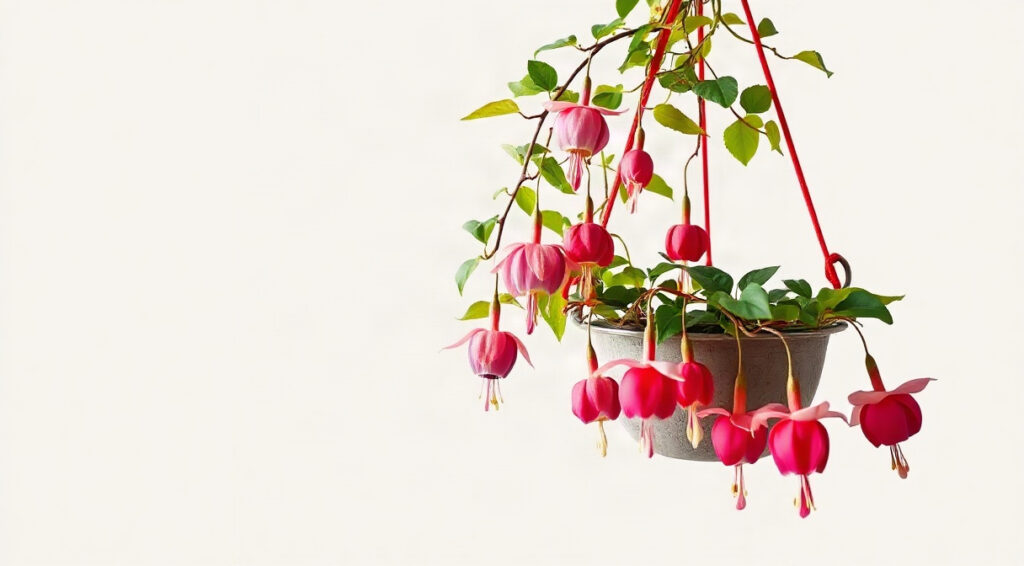
Fuchsia plant care winter starts with knowing whether your plant is tender, hardy or somewhere in between. A hanging basket on a sheltered UK patio faces different risks from a garden fuchsia in a cold US growing zone, so the best winter plan depends on variety, local temperatures and the plant’s growing conditions. With a little preparation, you can protect roots and stems, avoid overwatering during dormancy and encourage strong spring growth.
This guide explains how to overwinter fuchsias indoors, outdoors and in protected spaces, with practical timing for UK and US gardeners. You’ll also learn which varieties are more likely to survive outside and how to bring dormant plants back into growth without shocking them.
fuchsia plant care winter: Assess Your Plant and Local Climate
Before choosing a winter method, identify the fuchsia and assess the cold it is likely to face. Fuchsias are often sold as bedding plants, patio standards, basket specimens or hardy shrubs, but those labels alone do not tell you how much frost a particular plant can tolerate. The name on its label, the age of the plant, drainage and shelter all matter. If the label is missing, treat an unfamiliar variety as tender until you can verify its identity.
Start by checking whether the plant is described as hardy, half-hardy or tender. Tender cultivars are best moved under cover before frost. Hardy types may survive outdoors in suitable conditions, especially once established, but a cold spell can still damage young growth or roots. A newly planted hardy fuchsia deserves more protection than a mature shrub that has spent several years in the ground.
For UK gardeners, winter conditions vary widely between mild coastal areas, exposed uplands and inland gardens. A fuchsia that survives in a sheltered south-facing border may struggle in a windy, waterlogged plot. In the United States, use the USDA Plant Hardiness Zone Map as a broad guide to average annual extreme minimum temperatures, not as a guarantee that a plant will survive every winter. Find your region using the USDA Plant Hardiness Zone Map, then compare it with the hardiness information for your specific cultivar.
The phrase fuchsia hardiness zones can be misleading if treated as a fixed promise. A zone describes a regional temperature average, while wind exposure, sudden freezes, snow cover and winter wetness can make conditions harsher in an individual garden. A container also gets colder faster than garden soil because cold air reaches its sides and base. When in doubt, protect the plant rather than relying on a borderline zone rating.
Take a few minutes to inspect the growing situation before acting:
- Check the variety name and whether it is sold as hardy or tender.
- Note whether the fuchsia is in open ground, a pot or a hanging basket.
- Look for a sheltered position away from drying winds and frost pockets.
- Check the forecast for repeated hard frosts, not just the expected overnight low.
- Make sure containers drain freely and are not standing in water.
A hanging basket fuchsia needs particular attention because its compost and roots are exposed to cold on all sides. Even a cultivar that might tolerate a brief frost in the ground can lose roots in a frozen basket. Move baskets under cover early, or take cuttings as insurance if space is limited. For reliable fuchsia plant care winter, base the decision on the vulnerable root system as well as the plant’s label.
Think of overwintering as a choice between keeping the plant actively growing in a bright, frost-free place, storing it cool and dormant, or leaving a proven hardy variety outdoors with protection. Choose one approach before cold weather arrives. A last-minute move after several frosts can save a plant, but it is harder to manage than a planned transition.
Indoor Overwintering for Tender and Basket Fuchsias
Tender fuchsias and most basket plants need a frost-free winter home. Move them before the first hard frost, ideally when nights are becoming consistently chilly but the plant still has healthy leaves. In much of the UK, that often means preparing during October; in colder parts of the US, the safe date may arrive earlier. Follow local forecasts rather than a fixed calendar, and do not leave a basket outside simply because a mild afternoon is predicted.
First remove faded flowers, fallen leaves and any damaged or diseased growth. Check the undersides of leaves and stem joints for aphids, whitefly or other pests, and rinse or treat them before bringing the plant indoors. Pests multiply quickly in a warm room with limited airflow. If the plant is large, prune lightly to make it manageable, but save the main shaping cut for late winter or spring unless you need to remove damaged stems.
There are two useful indoor approaches. A bright, cool room keeps the plant more active, while a cool, dim space encourages dormancy. A bright porch, conservatory or frost-free greenhouse suits plants that retain leaves. Keep them out of intense direct midday sun and away from radiators, which can dry foliage and encourage weak growth. A dormant plant can be stored in a cool garage, cellar or spare room where temperatures remain above freezing; darkness is acceptable when it has shed its leaves.
In a cool dormant location, aim for stable conditions rather than frequent moves between warm and cold areas. Check the compost every few weeks. Water only enough to stop the root ball from drying completely; it should feel barely moist, not wet. A common mistake is to give a dormant fuchsia the same frequent watering it needed in summer. Cold, saturated compost restricts oxygen around roots and can lead to rot before spring growth appears.
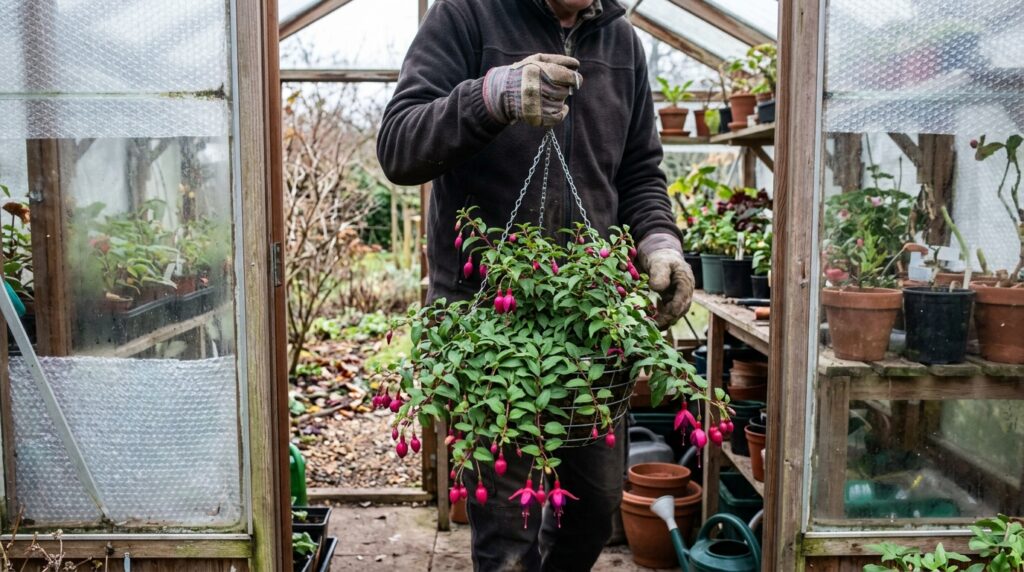
For a hanging basket fuchsia, remove the chains if needed and set the basket on a stable surface where it cannot freeze against an exterior wall or glass. You can also transfer the plant to a smaller pot if the basket is cumbersome, but avoid stripping away healthy roots during the move. Reduce the compost’s surface area by clearing dead plant material, and label each cultivar before leaves fall so you can identify it later.
Use this quick indoor routine:
- Inspect and clean the plant, then move it before hard frost.
- Choose either a bright, cool growing space or a cool dormant one.
- Keep pots clear of standing water and cold draughts.
- Water sparingly while growth is slow or absent.
- Check monthly for pests, mould and shrivelled stems.
Houseplants and tender plants need different conditions, but the according to Royal Horticultural Society guidance on indoor plant care can help you think about light, temperature and watering in a protected space. For fuchsia plant care winter, the key is to match watering to the plant’s actual activity. Do not feed a dormant specimen: fertilizer cannot replace the light and warmth it needs to grow.
Before storing a basket, decide whether it is worth keeping the whole plant or whether cuttings are a safer backup. A small set of healthy cuttings takes less space and can preserve a favourite cultivar. Indoor overwintering works best when the room is cool and the compost stays only slightly moist, rather than when a plant is pushed into soft growth by warmth.
Hardy Fuchsias Outdoors: Protection in UK and US Gardens
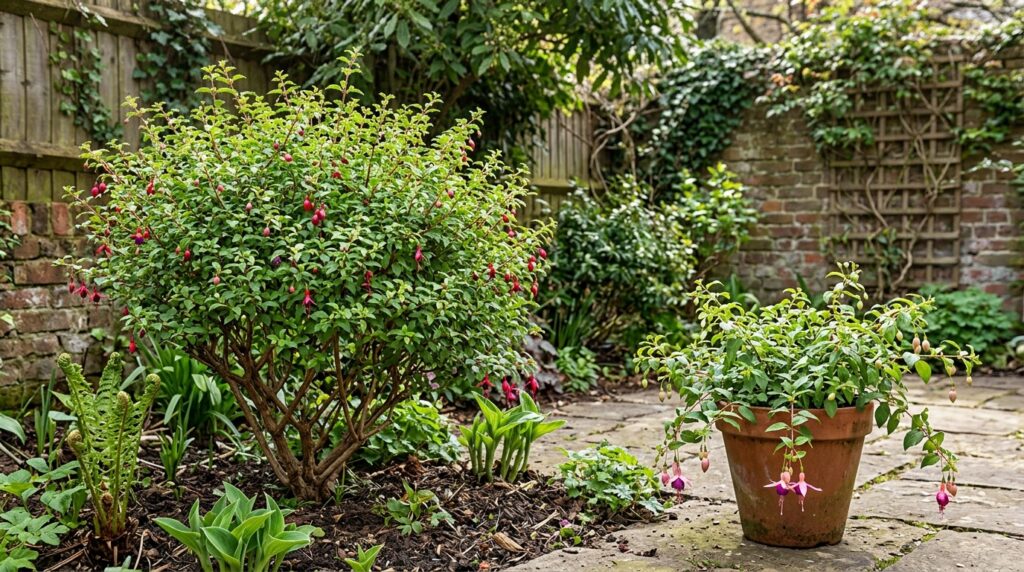
Some established hardy fuchsias can stay in the ground through winter, particularly in sheltered gardens with free-draining soil. Popular hardy choices include Fuchsia magellanica and cultivars such as ‘Riccartonii’ and ‘Hawkshead’. Their tolerance varies with location and conditions, so check the plant label and local experience before treating any variety as reliably hardy. In colder regions, even a commonly hardy selection may die back to the base or fail altogether in an unusually severe winter.
Do not confuse hardy garden varieties with tender cultivars sold for baskets or summer bedding. A label saying “patio fuchsia” or “hardy” is a useful clue, but not a substitute for checking the full name. The range of fuchsia hardiness zones can differ between species and cultivars, and published ratings may assume excellent drainage and a sheltered position. Gardeners near a plant’s cold limit should use a protective method even when it has survived previous winters.
In autumn, let hardy plants slow naturally. Stop applying high-nitrogen fertilizer by late summer, because a late flush of soft growth is more vulnerable to frost. Do not cut the entire shrub back hard before winter in a cold region. The old stems provide some protection to the crown, so wait until spring to assess what is alive. If you want a neater outline, remove only broken or diseased branches before winter and leave healthy stems in place.
After the soil cools, spread a loose mulch over the root area. Use dry leaves, composted bark or garden compost, keeping the material several centimetres away from the stem base so moisture does not collect against the crown. In exposed gardens, add evergreen boughs or horticultural fleece during a severe cold spell. Remove or loosen coverings when the weather turns mild; a permanently sealed wrap traps moisture and may encourage rot.
Drainage is just as important as temperature. Fuchsia roots can suffer in cold, waterlogged soil, especially if the planting site is heavy clay or lies at the bottom of a slope. Improve drainage before planting by choosing a raised bed or incorporating suitable organic matter through the planting area. Do not dig deeply around an established shrub in autumn, as disturbing roots shortly before winter can add stress.
For container-grown hardy varieties, a more cautious plan is sensible. Move the pot against a sheltered wall, lift it onto pot feet and wrap the container with insulating material, leaving drainage holes open. A garage or unheated greenhouse can offer extra protection when a prolonged freeze is forecast. In the coldest fuchsia hardiness zones, treat a potted hardy fuchsia more like a tender plant because its roots lack the insulation of surrounding earth.
Check soil moisture during dry spells, but avoid watering frozen ground. Mulch is protection, not a substitute for sensible siting. Fuchsia shrubs also benefit from adequate room: allow roughly 60–90 cm between medium-sized plants, or follow the mature spread listed for the cultivar. Crowded stems dry slowly after rain, while a plant with good airflow is easier to inspect for winter damage and spring disease.
Make a simple outdoor protection plan:
- Confirm the variety is suitable for outdoor wintering in your area.
- Leave healthy stems until spring in regions with hard freezes.
- Mulch the root zone without burying the crown.
- Protect pots and keep drainage holes clear.
- Remove temporary covers when conditions become mild and damp.
These steps do not make a tender variety hardy, but they can improve the odds for an established shrub. If you are designing a sheltered planting area, consider how paths, walls and neighbouring plants affect winter exposure; the ideas in this guide to courtyard garden layouts with shelter and planting space can help you plan protected spots. Well-chosen placement is often more effective than wrapping a poorly sited plant all season.
Outdoor fuchsia plant care winter is mostly about avoiding extremes: cold roots, waterlogged soil, drying wind and premature pruning. A hardy shrub may lose its top growth and still reshoot from the base. Wait for spring before assuming it has died, especially after a severe winter when new shoots may emerge later than expected.
Winter Watering, Pruning and Dormant Plant Checks
Dormancy is a seasonal slowdown, not a reason to ignore a plant for months. A fuchsia that has lost its leaves uses far less water than one actively flowering, but the roots still need to remain viable. Check stored plants every two to four weeks, adjusting the interval to the temperature and pot size. Small pots dry sooner than large ones, while cool, humid rooms slow evaporation.
Use the compost as your guide. Press a finger a few centimetres below the surface or lift the pot to judge its weight. If the compost is still damp, wait. If it is dry well below the surface and the stems are beginning to shrivel, water lightly around the root ball and allow excess to drain away. Never leave a pot sitting in a saucer full of water. Too much water is a frequent reason an otherwise healthy overwintered fuchsia fails to restart.
Frost-free storage also needs ventilation. Do not pack pots tightly together in a sealed shed where condensation can linger. Space them so air can move between plants, and remove fallen leaves promptly. Inspect stem joints for pests and look for fuzzy mould, blackened tissue or a sour smell from the compost. These signs may indicate a problem with moisture or ventilation. Remove affected material with clean pruners, then correct the growing conditions rather than simply cutting and carrying on.
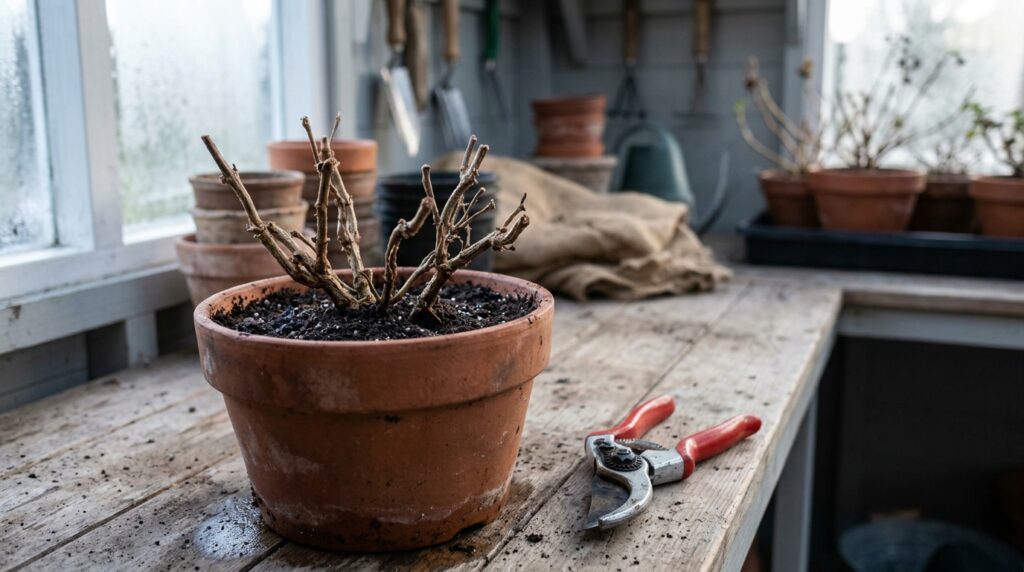
Pruning timing depends on the overwintering method. For a plant kept bright and leafy, trim only the longest or damaged shoots in autumn. For a cool, dormant plant, wait until late winter or early spring for the main pruning. In many UK gardens that falls around March; US gardeners should adjust to local frost risk and the plant’s location. Shorten healthy stems to a pair of strong buds, using clean, sharp secateurs.
Hard pruning too early can invite problems. Fresh shoots produced in a warm spell are vulnerable when the plant returns to cold conditions, and removing all old stems outdoors can expose the crown. Likewise, pruning every stem to the same low point is not automatically beneficial. Remove dead or crossing growth and shape the plant gradually, preserving a balanced framework. If you are unsure which stems are alive, scratch a small patch of bark: green tissue beneath it suggests the stem may still be viable.
Use a monthly inspection rather than frequent handling:
- Look for pests, mould, soft black patches and dry, brittle stems.
- Confirm that drainage holes are open and the pot is not waterlogged.
- Keep dormant plants away from heat sources and sudden temperature swings.
- Remove dead leaves and fallen debris without disturbing the roots.
- Record which plants were stored indoors and which stayed outside.
Do not feed a plant that has no active growth. Fertilizer salts can build up in cool compost and may damage roots. Resume feeding only when new shoots are growing steadily in spring, using a balanced liquid fertilizer at the label’s recommended dilution. Before that, fresh compost or a top-up is usually unnecessary unless the plant needs repotting or the existing compost has broken down.
A hanging basket fuchsia may need closer checks because its compost can dry unevenly and the basket is difficult to handle once stored. Remove excess water from the outer container, and do not place a plastic cover over the whole plant. For a dormant basket, a cool, frost-free spot and occasional light watering are safer than a heated room. Make a note of any weak or damaged stems so you can prune them once the plant begins to wake.
Good sanitation matters throughout winter. Clean pruners between plants, especially when removing diseased tissue, and avoid using the same damp cloth on every pot. For wider garden hygiene ideas that support healthy planting, see these practical bee-friendly garden plant choices; choosing suitable companion plants can help create a more resilient garden around your fuchsias. Thoughtful checks and restrained care are the foundation of dependable fuchsia plant care winter.
Spring Wake-Up and Choosing Varieties for Your Region
Bring stored plants back into growth gradually. In late winter or early spring, move a dormant fuchsia to a brighter, slightly warmer frost-free location. Start before vigorous new growth is needed, but do not put it straight into full outdoor sun. Once buds swell, increase watering little by little. The compost should become evenly moist as shoots develop, never sodden. A sudden jump from near-dry storage to frequent heavy watering can stress roots that are still waking.
When new shoots are several centimetres long, prune dead or weak stems and shape the plant. Cut just above a healthy pair of buds, and pinch the growing tips once shoots have formed a few sets of leaves if you want a bushier shape. Avoid removing all the new growth at once. A plant needs leaves to rebuild energy, and repeated pinching can delay flowers if done too late in the season.
Begin hardening off only after the risk of severe frost has passed. Set the plant outdoors in a sheltered, shaded position for a few hours, then bring it back in. Increase its time outdoors and exposure to morning light over seven to ten days. Keep it protected from strong wind and harsh midday sun while it acclimates. In the UK, the timing varies by region; US gardeners should follow local frost dates and actual forecasts, not a national calendar.
Repot only when necessary. If roots circle the pot or grow through the drainage holes, move the plant into a container one size larger, using fresh, free-draining potting mix. An oversized pot holds more wet compost than a small root system can use, which can slow growth and encourage root problems. Refreshing the top layer may be enough for a plant that still has room. Start feeding once active growth is established, and follow the product label rather than assuming stronger fertilizer produces more flowers.
Choose varieties with both climate and intended use in mind. For a sheltered border in a suitable UK garden, Fuchsia magellanica and selections such as ‘Riccartonii’ are widely grown hardy options; ‘Hawkshead’ is another cultivar gardeners may consider. In colder locations, treat these as candidates to research, not guaranteed survivors. Tender varieties such as many large-flowered bedding fuchsias are better suited to summer displays and frost-free winter storage.
In the US, compare the listed hardiness of a named cultivar with your local conditions and consider whether you want a garden shrub, a container plant or a hanging basket fuchsia. A basket makes it easy to display trailing cultivars but also means the roots need winter shelter. If you garden near the cold edge of a variety’s range, keep a backup cutting or overwinter the container in a protected place. The right choice depends on the winter you actually experience, not just the broad fuchsia hardiness zones label.
Before buying, ask these questions:
- Is the cultivar hardy, half-hardy or tender, and what evidence supports that rating?
- Will it grow in a border, pot or hanging basket in your available space?
- Can you provide a frost-free location if the variety needs winter protection?
- Does the mature size suit the site, with room for airflow and pruning?
- Can you obtain a replacement or keep a cutting if the winter is unusually severe?
For a mixed display, pair fuchsias with plants that enjoy similar light and watering, but avoid crowding them. A sheltered patio can support summer containers, while a border variety may be better left in place with winter mulch. If you are growing a tender fuchsia indoors alongside other plants, the advice on care conditions for indoor jasmine offers useful context for managing light and moisture indoors, although the plants have different needs.
Once temperatures are reliably mild, return the fuchsia to its display position and monitor it for a few weeks. A little leaf loss during the transition can be normal; persistent wilting, blackened stems or sour compost calls for a closer inspection. Fuchsia plant care winter is successful when the plant resumes steady, healthy growth, not merely when it survives until spring. Keep records of what worked so you can refine your method next year.
Frequently Asked Questions
Should I cut my fuchsia back before winter?
Remove flowers, fallen leaves and damaged stems, but avoid cutting hardy outdoor plants hard before winter in cold regions. Leave healthy stems to help protect the crown. For indoor dormant plants, save the main shaping prune for late winter or early spring, when you can see which stems are alive.
Can I leave a fuchsia in a hanging basket outside?
Only if the variety and your local winter conditions make that safe, and even then the exposed roots are at risk. Most tender basket fuchsias should be moved to a frost-free place before hard frost. A sheltered wall can reduce wind exposure but does not prevent a basket from freezing.
How often should I water a dormant fuchsia?
Check the compost every two to four weeks and water lightly only when it is drying well below the surface. Dormant plants need far less water than actively growing ones. Never leave the pot standing in water, because cold, wet compost can cause root rot.
Which fuchsias can survive outdoors in winter?
Established hardy varieties such as Fuchsia magellanica and cultivars including ‘Riccartonii’ may survive outdoors in suitable sheltered gardens. Their success depends on local climate, drainage and exposure. Check the exact variety’s rating, and protect young plants or containers more carefully than established in-ground shrubs.
When should I bring an overwintered fuchsia back outside?
Wait until severe frost is no longer expected, then harden the plant off over seven to ten days. Begin in a sheltered, shaded position and gradually increase its outdoor time. Use local forecasts and frost dates because the safe timing differs between UK regions and US climates.
What does a fuchsia hardiness zone tell me?
A hardiness zone gives a broad indication of average annual extreme minimum temperatures, not a guarantee of survival. Wind, drainage, winter wetness, exposure and container size all affect results. Use the zone as one part of your decision, alongside the cultivar’s own guidance and conditions in your garden.
Conclusion
The best fuchsia plant care winter plan starts with the variety and the climate, then protects the roots from frost and excess moisture. Store tender plants cool and frost-free, shelter baskets, and mulch established hardy shrubs where conditions allow. Check dormant plants occasionally and restart watering and growth gradually in spring. For more practical ideas to help your garden thrive, explore Blossom Gardens Hub’s gardening guides and plan your next season with confidence.
Sources and Further Guidance
Winter survival varies by cultivar and local conditions, so use plant labels and regional guidance when making a final decision. The Royal Horticultural Society’s houseplant guidance offers further advice on caring for plants in protected indoor spaces, while the USDA map helps US gardeners understand regional winter temperature patterns.
