
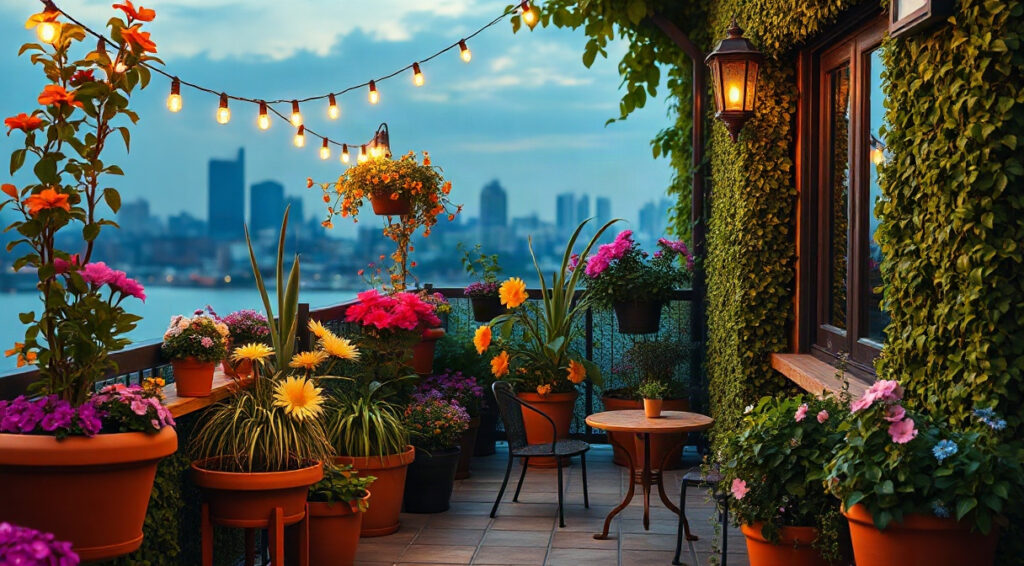
Balcony garden ideas have become essential for urban dwellers seeking to create lush, functional outdoor retreats in limited square footage. Whether you have a compact balcony or a spacious terrace, transforming your outdoor area into a green sanctuary is more achievable than ever. With thoughtful planning, the right container plants, ambient solar lighting, and comfortable outdoor furniture, you can design a space that feels expansive despite its modest dimensions. This comprehensive guide explores proven strategies for terrace plant decor small space environments, helping you maximize every inch while creating a visually stunning and practical garden oasis.
1. Container Plants: The Foundation of Every Balcony Garden
Container gardening forms the backbone of successful balcony garden ideas, offering flexibility, mobility, and endless creative possibilities. When floor space is limited, thinking vertically and strategically about your plant containers becomes paramount.
Choosing the Right Containers for Your Space
Not all containers are created equal, especially when working with terrace plant decor small space constraints. Consider these factors when selecting pots and planters:
- Weight limitations: Check your balcony’s load-bearing capacity before installing heavy ceramic or concrete planters
- Drainage requirements: Ensure every container has adequate drainage holes to prevent root rot
- Material durability: Fiberglass, resin, and high-quality plastics withstand temperature fluctuations better than terracotta in exposed conditions
- Self-watering options: Invest in self-watering containers for busy lifestyles or hot climates
- Stackable designs: Modular container systems maximize vertical growing potential
For more inspiration on selecting perfect containers, explore our complete resources at Blossom Gardens Hub balcony garden ideas collection.
Best Plant Varieties for Compact Containers
Certain plants thrive particularly well in container environments and contribute significantly to successful terrace plant decor small space designs:
- Herbs: Basil, thyme, rosemary, and mint provide culinary value and aromatic pleasure
- Trailing plants: Ivy geraniums, bacopa, and trailing petunias cascade beautifully from elevated containers
- Dwarf vegetables: Cherry tomatoes, compact peppers, and bush beans offer edible rewards
- Ornamental grasses: Festuca glauca and carex varieties add texture and movement
- Succulents and cacti: Low-maintenance options for sun-drenched south-facing balconies
- Climbers: Clematis, jasmine, and compact honeysuckle varieties utilize vertical space efficiently
As according to RHS Small Space Gardening, choosing plants with multiple seasons of interest ensures your balcony remains visually engaging throughout the year rather than peaking for brief periods.
Creating Visual Impact with Container Arrangements
Professional designers employ specific techniques to make small spaces appear larger and more cohesive:
- Thriller, filler, spiller formula: Combine tall statement plants, medium mounding varieties, and trailing specimens in single large containers
- Color coordination: Limit your palette to 2-3 complementary colors for sophisticated impact
- Repetition: Use identical containers or plants at intervals to create rhythm and unity
- Layered heights: Position taller containers at the back, stepping down to lower ones at viewing points
2. Solar Lighting: Sustainable Ambiance for Evening Enjoyment
Extending your balcony’s usability into evening hours requires thoughtful lighting design. Solar-powered solutions offer eco-friendly, cost-effective illumination without complex electrical installations—perfect for rental properties and terrace plant decor small space situations where permanent fixtures aren’t feasible.
Types of Solar Lighting for Balcony Gardens
Modern solar lighting technology has evolved dramatically, providing reliable brightness and extended runtime:
- Solar string lights: Drape across railings or overhead structures for fairy-tale ambiance
- Stake lights: Insert among containers to uplight foliage and create dramatic shadows
- Wall-mounted lanterns: Affix to vertical surfaces for space-efficient illumination
- Tabletop solar lamps: Provide focused light for dining and reading areas
- Submersible solar lights: Add magic to small water features or reflective surfaces
- Motion-sensor security lights: Combine safety with convenience for darker corners
Strategic Placement for Maximum Effect
Effective solar lighting placement transforms functional illumination into atmospheric design:
- Highlight focal points: Direct light toward your most impressive plants or decorative elements
- Create pathways: Line walking routes with low-level lights for safety and guidance
- Layer light sources: Combine multiple heights and intensities for dimensional interest
- Consider color temperature: Warm white (2700-3000K) creates coziness; cooler tones feel more contemporary
- Avoid light pollution: Shield fixtures to prevent disturbing neighbors or wasting energy upward
Maximizing Solar Performance
To ensure consistent performance from your solar lighting investments:
- Position solar panels where they receive direct sunlight for at least 6-8 hours daily
- Clean panels monthly to remove dust and debris that reduce charging efficiency
- Replace rechargeable batteries every 1-2 years as capacity degrades
- Store removable lights indoors during extreme winter weather
- Choose lithium-ion battery models for superior cold-weather performance
3. Outdoor Furniture: Comfort Without Compromising Space
Selecting appropriate outdoor furniture represents one of the most challenging aspects of executing balcony garden ideas in limited areas. Every piece must earn its place through multifunctionality, appropriate scale, and stylistic contribution.
Space-Saving Furniture Solutions
Innovative designs specifically address terrace plant decor small space limitations:
- Folding furniture sets: Tables and chairs that collapse flat for storage when not in use
- Wall-mounted drop-leaf tables: Create dining surfaces that disappear completely
- Bench seating with storage: Combine seating with concealed space for cushions, tools, or supplies
- Nesting tables: Stackable surfaces that expand for entertaining, contract for daily use
- Hammock chairs: Single-point suspension seating that eliminates floor footprint
- Convertible loungers: Pieces that transition from upright seating to reclined relaxation
Material Selection for Longevity
Balcony furniture faces unique environmental stresses requiring durable materials:
- Teak and acacia: Naturally weather-resistant hardwoods that develop attractive patinas
- Aluminum with powder coating: Lightweight, rust-proof, and available in extensive color options
- Synthetic wicker: UV-stabilized polyethylene weaves withstand moisture without degradation
- Stainless steel: Marine-grade options resist corrosion in coastal environments
- Recycled plastics: Eco-conscious choices that mimic wood appearance with superior durability
Scale and Proportion Guidelines
Avoiding overcrowding requires disciplined attention to spatial relationships:
- Maintain minimum 30-inch clear pathways for comfortable movement
- Choose furniture with visual lightness—open frames and slender profiles
- Consider the “rule of thirds”—fill no more than two-thirds of available floor space
- Select pieces proportional to your railing height and overall balcony dimensions
- Use transparent or reflective materials (glass tabletops, mirrored accents) to expand perceived space
4. Vertical Gardening: Maximizing Growing Space
When horizontal area is severely restricted, vertical surfaces become invaluable real estate for ambitious balcony garden ideas. Wall-mounted and hanging systems multiply your planting capacity without sacrificing floor space essential for furniture and circulation.
Vertical System Options
Diverse approaches suit different architectural contexts and aesthetic preferences:
- Living wall panels: Modular pocket systems that create dense green tapestries
- Trellis and espalier frameworks: Support climbing plants while creating visual screens
- Hanging planters: Macramé holders, tiered baskets, and suspended pots at varying heights
- Wall-mounted planters: Individual containers secured to vertical surfaces in artistic arrangements
- Pallet gardens: Repurposed wooden pallets converted into rustic planting stations
- Green screens: Freestanding panels that divide space while supporting vegetation
Plant Selection for Vertical Success
Not all plants adapt well to vertical growing conditions. Prioritize these characteristics:
- Lightweight root systems: Avoid heavy, deep-rooted specimens that stress mounting hardware
- Tolerant of drying: Vertical positions often experience increased wind exposure and faster moisture loss
- Trailing or climbing habits: Natural growth patterns complement vertical presentation
- Seasonal rotation capability: Choose plants that can be swapped to maintain year-round interest
Excellent vertical candidates include ferns for shaded positions, sedums for sun-exposed walls, and flowering annuals like lobelia and nemesia for seasonal color bursts. For comprehensive vertical gardening guidance, visit Blossom Gardens Hub balcony garden ideas where we explore advanced techniques in depth.
Installation Safety Considerations
Vertical installations on elevated structures demand particular attention to security:
- Verify wall material suitability and use appropriate anchors for concrete, brick, or siding
- Distribute weight evenly across structural elements rather than concentrating load points
- Install drip trays or drainage collection to prevent water damage to surfaces below
- Secure all hanging elements against wind uplift with secondary safety tethers
- Periodically inspect mounting hardware for corrosion or loosening
5. Design Themes and Stylistic Cohesion
Successful terrace plant decor small space execution depends upon coherent design vision. Random accumulation of plants and furniture typically produces cluttered, unsatisfying results regardless of individual element quality.
Popular Balcony Garden Themes
Established design directions provide helpful starting frameworks:
- Mediterranean terrace: Terracotta containers, lavender and rosemary, weathered wood furniture, warm lighting
- Japanese minimalist: Restrained plant palette, clean lines, natural stone, contemplative water feature
- Tropical retreat: Lush foliage density, bold leaf shapes, vibrant cushions, bamboo accents
- English cottage: Overflowing containers, romantic climbing roses, vintage-look furniture, soft pastels
- Scandinavian modern: Simple geometric planters, hardy grasses, pale wood, monochromatic scheme with single accent color
- Industrial urban: Metal containers, structural plants, concrete surfaces, Edison bulb lighting
Creating Cohesion Through Repetition
Unifying diverse elements requires deliberate repetition strategies:
- Container consistency: Use single material or color family across all planters
- Color echoing: Repeat plant flower colors in cushion fabrics or decorative accessories
- Texture rhythm: Alternate rough and smooth surfaces in predictable patterns
- Geometric alignment: Maintain consistent angles and spacing in furniture arrangement
Seasonal Refresh Strategies
Maintaining engagement with your balcony garden throughout the year:
- Develop seasonal planting calendars with 3-4 major transitions annually
- Invest in removable cushion covers for easy color scheme updates
- Collect portable decorative elements (lanterns, sculptures, textiles) for rotation
- Document successful combinations photographically for future reference
- Create winter interest with evergreen structure, berry-producing shrubs, and decorative bark
Frequently Asked Questions
How do I start a balcony garden with no gardening experience?
Begin with resilient, low-maintenance plants such as pothos, snake plants, or succulents that forgive inconsistent watering. Start with 3-5 containers maximum to avoid overwhelming yourself, and gradually expand as your confidence grows. Focus on understanding your specific balcony’s light conditions—observe which areas receive direct sun and for how long—then select plants matched to those exposures. Local garden centers typically offer guidance tailored to your climate, and numerous online communities provide support for beginners implementing balcony garden ideas.
What are the weight limits for balcony gardens?
Weight capacity varies dramatically based on construction era, building codes, and structural design. Typical residential balconies support 40-100 pounds per square foot, but heritage buildings may offer significantly less capacity. Always consult your building manager, structural engineer, or original architectural specifications before installing heavy containers, water features, or substantial furniture. Distribute weight near structural supports rather than cantilevered edges, and consider lightweight growing media alternatives like expanded clay pellets that reduce container weight by 50% compared to traditional potting mix.
How can I create privacy in my balcony garden?
Multiple strategies address privacy concerns in terrace plant decor small space environments without permanent structural modifications. Tall container plants like bamboo in restricted root barriers, climbing vines on trellis screens, or ornamental grasses create living screens that improve over seasons. Retractable awnings, outdoor curtains on tension wires, or decorative lattice panels offer immediate solutions. For rental properties, freestanding privacy screens or tall shelving units planted densely provide flexibility when relocation becomes necessary. Consider your specific sightline challenges—overlooking windows, neighboring balconies, or street-level observation—when selecting appropriate height and density.
What maintenance routine keeps a balcony garden thriving?
Consistent, appropriate maintenance prevents minor issues from becoming major problems. Develop weekly habits including: checking soil moisture before watering ( containers dry faster than ground plantings), removing spent flowers to encourage continued blooming, inspecting for pest signs on leaf undersides, and rotating containers quarterly for even growth. Monthly tasks encompass: fertilizing during growing seasons with diluted liquid feed, cleaning solar light panels for optimal charging, tightening any loosened hardware, and pruning for shape and airflow. Seasonal deep maintenance involves: refreshing container soil top layers, assessing and replacing deteriorating furnishings, planning next season’s plant selections, and protecting sensitive specimens during extreme weather.
How do I protect my balcony garden from wind and extreme weather?
Elevated balconies experience intensified wind exposure that damages plants, dries soil rapidly, and destabilizes furniture. Mitigation strategies include: selecting wind-tolerant plants with flexible stems rather than brittle specimens, creating permeable windbreaks that filter rather than block airflow (solid barriers create damaging turbulence), securing all containers with non-slip pads or tethering systems, installing retractable shade sails for intense sun or hail protection, and developing evacuation plans for movable items when severe weather threatens. During winter, insulate container root zones with bubble wrap or horticultural fleece, and relocate most vulnerable specimens to sheltered positions or indoor temporary accommodation.
Can I grow vegetables successfully on a small balcony?
Absolutely—many productive vegetables thrive in container environments with adequate sunlight. Prioritize compact or dwarf varieties bred specifically for container culture: ‘Tiny Tim’ tomatoes, ‘Patio Snacker’ cucumbers, ‘Bush Baby’ zucchini, and compact bush bean varieties. Ensure containers minimum 12 inches deep for root development, use quality potting mix rather than garden soil, and maintain consistent moisture as vegetables stress easily from drought. Leafy greens, salad greens, and herbs offer highest success probability for beginners, while fruiting crops demand more attention to fertilization and pollination assistance. With proper care, a well-managed balcony vegetable garden can supplement household produce significantly throughout growing seasons.
How much does it cost to create a beautiful balcony garden?
Budgets range enormously from under $200 for basic DIY implementations to $5,000+ for designer-executed transformations with premium materials. Cost-effective approaches emphasize: propagating plants from cuttings or seeds rather than purchasing mature specimens, repurposing household items as containers, building simple furniture from construction lumber, and selecting solar lights from mainstream retailers rather than specialty suppliers. Prioritize investment in quality soil and containers that persist across multiple seasons, while saving on plants that naturally require regular replacement. Remember that established balcony garden ideas evolve over years—avoid pressure to achieve finished appearance immediately, and allow your garden to develop organically as budget permits.
Conclusion: Your Balcony Transformation Awaits
Creating a remarkable outdoor sanctuary from modest balcony dimensions requires creativity, strategic planning, and thoughtful selection of elements that serve multiple purposes. The balcony garden ideas explored throughout this guide demonstrate that limitations often inspire the most innovative solutions—compact spaces frequently achieve greater intimacy and detail than sprawling gardens where elements compete for attention.
Success with terrace plant decor small space design emerges from understanding your specific conditions, establishing clear aesthetic direction, and implementing systems that reduce maintenance burden while maximizing enjoyment. Container plants provide living beauty and potential harvests; solar lighting extends usability into magical evening hours; well-chosen outdoor furniture invites genuine relaxation and social connection.
Whether you envision a productive kitchen garden, a contemplative green retreat, or a vibrant entertainment space, the principles outlined here provide foundation for confident execution. Start simply, observe how your space responds through seasons, and evolve your design as experience accumulates.
Ready to begin your transformation? Explore our comprehensive resources, detailed plant guides, and curated product recommendations at Blossom Gardens Hub—your definitive destination for creating the balcony garden of your dreams. Share your progress, ask questions, and connect with fellow urban gardeners who understand the unique rewards of cultivating beauty in compact spaces.
