
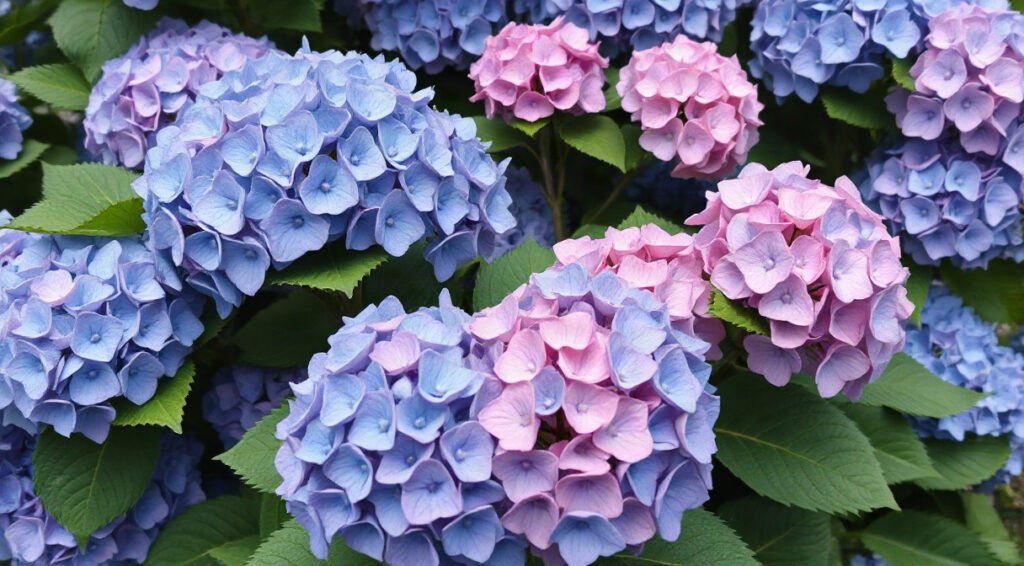
A hydrangea not blooming can be frustrating, especially when the shrub looks leafy and healthy. In many cases, the plant is growing well but has lost its flower buds to mistimed pruning, late frost, excessive shade or a stressful growing season. The right fix depends on the hydrangea species, when it forms buds and the conditions in your garden.
This guide explains how to identify the cause before reaching for fertiliser or secateurs. It also covers practical pruning hydrangeas for flowers, soil adjustments for blue or pink blooms, and light and watering changes for gardeners in the UK and US.
Why a hydrangea not blooming needs diagnosis first
Start by identifying the type of hydrangea you own. The name on the plant label, an old receipt or a photograph of last year’s flowers can help. Different species bloom on different kinds of wood, so the same pruning cut can be harmless on one shrub and remove nearly every flower bud on another.
Bigleaf hydrangeas (Hydrangea macrophylla) and mountain hydrangeas (H. serrata) often form next season’s buds on older stems. Oakleaf hydrangeas (H. quercifolia) also flower on old wood. By contrast, panicle hydrangeas (H. paniculata) and smooth hydrangeas (H. arborescens) flower on new growth produced during the current season. Some newer bigleaf cultivars rebloom on both old and new wood, but they still benefit from careful pruning.
Look at the shrub’s history as well as its species. Did it flower last summer? Was it cut back in autumn or spring? Did a late freeze follow a warm spell? Did a nearby tree grow enough to shade it? Those clues narrow the problem more reliably than a general-purpose feed. A plant that has never bloomed may also be immature: newly planted shrubs can spend a season or two establishing roots before flowering well.
Check stems and buds before pruning
In late winter or early spring, inspect a few stems rather than cutting the whole shrub. A live stem is usually firm, while a dead section may be brittle and dry. Scrape a small patch of bark with a clean fingernail: green tissue beneath suggests the stem is alive. Check from the tip down, because frost may kill only the upper portion. Wait until the risk of severe frost has passed before removing damaged wood from old-wood bloomers.
Also consider whether the plant is receiving too much nitrogen. Lawn fertiliser drifting into a border, or repeated applications of high-nitrogen feed, can encourage lush leaves and long stems at the expense of flowers. Do not respond to every flowerless season with more fertiliser. First review pruning, exposure, winter damage, moisture and plant age.
- Healthy foliage, no flowers: suspect pruning, shade, excess nitrogen or lost buds.
- Brown, dry leaf edges: check for drought, wind exposure or roots competing with nearby trees.
- Weak, sparse growth: investigate drainage, root health, severe cold and planting conditions.
A single missed season does not always mean the shrub is failing. Hydrangeas can take time to recover after transplanting, drought or hard pruning. For now, keep a simple record of when you prune, when buds emerge and how much sun the plant receives. That evidence will guide the next adjustment.
Pruning hydrangeas for flowers: get the timing right
Pruning is one of the most common reasons for a hydrangea not blooming, but the solution is not to avoid all cutting. It is to prune according to the plant’s flowering habit and to make cuts at the right time. A shrub that flowers on old wood can lose its developing buds when cut back in late winter, while a new-wood bloomer can usually be shaped before spring growth begins.
Old-wood types: prune after flowering, if needed
For bigleaf, mountain and oakleaf hydrangeas, keep pruning light. In the UK, remove spent flower heads and shape the plant after flowering, usually in late summer. In much of the US, the same principle applies: prune soon after the flowers fade, rather than waiting until late winter or spring. This gives the shrub time to form and mature buds for the following year.
Do not cut every stem down to the ground just because the shrub looks untidy. On an established plant, remove only dead, damaged or crossing stems, and take out a few of the oldest stems at the base if renewal is needed. If you are unsure whether a stem is alive, wait until spring growth makes the answer clearer. Leave the dry flower heads over winter if they help protect the buds below from cold, then snip above the first healthy pair of buds when growth resumes.
For a large, neglected old-wood hydrangea, spread renovation over two or three years. Removing about one-third of the oldest stems at ground level in a year is less disruptive than cutting the whole shrub back at once. A reblooming cultivar may flower on new growth after a setback, but its early flowers can still be lost when old stems are cut.
New-wood types: shape before growth starts
Panicle hydrangeas such as ‘Limelight’ and ‘Little Lime’, and smooth hydrangeas such as ‘Annabelle’ and ‘Incrediball’, form flowers on new growth. In the UK, prune these in late winter or early spring, often in March; in colder US regions, wait until the worst cold has passed, commonly from late winter into early spring. Check local weather rather than following a fixed calendar date.
Reduce healthy stems to a framework of strong buds, or cut back more firmly if the plant needs renewal. Leaving a sturdy framework helps support heavy flower heads. Avoid cutting all stems to the same very low height year after year: soft, vigorous shoots may then produce large flower heads that flop after rain. A stronger branching framework usually supports flowers better.
- Confirm the species or cultivar before cutting.
- Remove dead, diseased and damaged wood first.
- Prune old-wood bloomers after flowering; prune new-wood bloomers before spring growth.
- Use clean, sharp secateurs and make cuts just above a healthy pair of buds.
Good pruning hydrangeas for flowers is restrained and timed to the plant, not simply to the season when the garden looks untidy. If an old-wood shrub was cut back in spring, the best response is usually patience: protect the new stems and avoid another hard prune that year.
Soil chemistry, nutrients and useful hydrangea color change tips
Soil chemistry affects bloom colour in some hydrangeas, but it is rarely the direct reason a shrub produces no flowers. The colour effect applies mainly to pink or blue bigleaf and mountain hydrangeas. In suitable cultivars, acidic soil makes aluminium more available to roots and can support blue flowers; less acidic soil limits aluminium uptake and tends to support pink or mauve flowers. White cultivars generally remain white, and soil treatment cannot turn every variety blue.
For gardeners trying hydrangea color change tips, test the soil before making changes. A basic soil test can show pH and, depending on the service, nutrient levels. Blue flowers are often associated with a soil pH around 5.2 to 5.5; pink flowers are more likely in less acidic soil, often above about 6.0. These are useful guides, not guarantees. Cultivar genetics, aluminium availability and existing soil conditions all matter.
Change colour gradually and safely
Do not pour household vinegar, coffee or other improvised remedies around the roots. They do not provide a dependable, lasting pH adjustment, and concentrated applications can damage roots. Garden sulphur can lower pH gradually, while lime can raise it, but rates depend on the soil type and product. Follow a soil-test recommendation and the label directions, then retest rather than applying repeated doses by guesswork.
For a blue-flowering bigleaf hydrangea, a labelled hydrangea colour product containing aluminium sulphate may help where the variety is capable of changing colour. Apply only as directed and avoid overuse: too much aluminium or an abrupt chemistry change can harm roots and neighbouring plants. For pink flowers, a measured application of garden lime may raise pH, but it cannot guarantee a particular shade in every garden. Colour changes are gradual and may take a season or longer.
Think of colour adjustment as a separate project from solving a hydrangea not blooming. If flower buds are being removed by pruning, or the plant is in deep shade, altering pH will not restore them. First address the conditions that affect bud formation and survival.
Feed for steady growth, not excessive leaves
Hydrangeas need healthy soil, but they do not usually need heavy feeding. Before adding fertiliser, check whether the plant is growing in compacted ground, waterlogged soil or a dry root zone. Add a modest layer of compost over the root area each spring, keeping it a few centimetres away from the stems. If a soil test identifies a nutrient shortage, choose a suitable product and use the recommended rate.
Excess nitrogen is a frequent mistake. Fertiliser intended for a lawn can wash or drift into nearby beds and stimulate leafy growth. Avoid applying lawn feed close to the shrub, and do not use a high-nitrogen product in the hope that bigger leaves will lead to more flowers. For practical soil-building ideas, see our guide to composting cardboard at home; use finished compost as a soil amendment rather than burying fresh cardboard against hydrangea roots.
In a container, refresh or replace tired potting mix when the plant is dormant or beginning spring growth, and make sure the pot drains freely. A pot that is too small dries rapidly and restricts roots; one without drainage holes can leave them waterlogged. Container plants need more consistent watering than established shrubs in the ground, but feeding still should be measured and appropriate to the growing medium.
Adjust light, water and shelter to protect flower buds
Hydrangeas generally flower best with bright light and reliable moisture, but the ideal balance varies by species and climate. Morning sun with afternoon shade is a useful starting point for bigleaf hydrangeas in hot regions. In cooler UK gardens, a position with more sun may help a plant flower well, provided the soil does not dry out. Panicle hydrangeas usually tolerate and often benefit from more sun than bigleaf types.
When a hydrangea not blooming sits beneath mature trees, it may receive too little light and face competition for water. Observe the plant through the day rather than estimating from a quick glance. Four to six hours of direct sun is often a practical target for good flowering, though the right amount depends on heat, cultivar and moisture. Dense shade can produce long, weak stems and few flowers. On the other hand, intense afternoon sun in a hot US summer can scorch leaves and stress the shrub.
Make a light adjustment gradually
If the hydrangea is shaded by a tree or large shrub, do not immediately expose it to full afternoon sun. Thin an overhanging branch where appropriate, or move a container plant in stages over one or two weeks. If relocating a garden shrub is necessary, do it during dormancy or in cool weather, preserve as much of the root ball as possible and water thoroughly after planting. A site with morning sun and protection from the hottest afternoon rays is often a sensible compromise.
For container-grown plants, rotate the pot occasionally so growth is not crowded to one side, but avoid moving it repeatedly between very different conditions. A sheltered, bright position also reflects basic placement advice according to Royal Horticultural Society. Although that guidance covers houseplants, the broader principle of matching light and conditions to the plant is useful when assessing a hydrangea’s position.
Water deeply and protect against stress
Hydrangeas have broad leaves and can wilt quickly in dry weather. Water the root zone deeply when the soil is dry below the surface, rather than giving frequent shallow sprinkles. A mulch layer about 5 to 8 centimetres deep helps conserve moisture; keep it clear of the stems. In a hot spell, check container plants daily, since a small pot may dry out much faster than garden soil.
Wilting in the afternoon does not always mean a plant needs water immediately. Check the soil first: if it is still moist, temporary midday drooping may be a response to heat. Waterlogged roots also wilt, so improve drainage rather than adding more water when the ground remains saturated. Consistent moisture during active growth helps buds develop, but a hydrangea should not stand in a permanently flooded planting hole.
Cold snaps can kill buds on old-wood hydrangeas even when the shrub survives. This is especially likely after a mild spell prompts early growth, followed by a hard frost. Site vulnerable varieties away from exposed winds and frost pockets. In a cold US region, choose a reliably hardy cultivar and give young shrubs a light protective mulch over the root zone; in the UK, a sheltered wall or hedge can reduce wind exposure. Do not wrap a plant so tightly that it traps moisture or damages emerging stems.
Check local advice for your region and species. The University of Minnesota Extension hydrangea guide explains selection and care for cold-climate gardens, while UK gardeners should consider local winter exposure and cultivar hardiness.
A seasonal recovery plan for UK and US gardeners
Once you know why a hydrangea not blooming has disappointed, make one or two targeted changes rather than changing everything at once. A simple seasonal plan protects existing buds and makes it easier to learn what works. Record the cultivar, pruning date, light conditions and flowering result. The calendar below is a guide: local frost dates and the hydrangea’s growth stage matter more than an exact day.
Late winter and early spring
In the UK, inspect plants in February or March as new growth begins; in much of the US, do the same when the severe cold has passed. Identify old-wood versus new-wood types before pruning. Remove clearly dead stems, but delay cutting questionable old-wood stems until buds show which sections are alive. Prune panicle and smooth hydrangeas before active growth, and leave bigleaf, mountain and oakleaf hydrangeas largely intact.
Check soil drainage and make sure mulch is not piled against the stems. If the plant is in a pot, confirm that water can escape and that the roots are not packed into a very small container. Apply compost or a suitable fertiliser only when the plant is starting growth and only as needed. Keep lawn fertiliser away from the root zone.
Spring and summer
As leaves emerge, watch for frost damage. If an old-wood hydrangea’s tips turn brown after a cold night, wait until you can see where healthy growth starts before cutting. Water deeply during dry spells and note how many hours of direct sun the plant receives. If it is under a tree, compare moisture at the hydrangea’s root zone with an open part of the garden.
In early summer, avoid hard pruning old-wood varieties even if the shrub looks uneven. Lightly stake or support heavy stems instead of cutting off developing flower buds. If the shrub is a new-wood bloomer, remove weak or crossing stems as needed, but avoid excessive cutting after growth is well underway. This is also a good time to note whether the flowers are opening on new shoots or older stems, information that helps confirm the plant’s pruning group.
If colour is your goal, start with a soil test and adjust pH gradually; do not make changes during a heatwave or while the plant is drought-stressed. For more hydrangea color change tips, remember that only suitable varieties respond reliably, and the colour shift may take more than one season. Keep a record of pH and any products used so you do not repeat applications unnecessarily.
Late summer and autumn
After old-wood hydrangeas finish flowering, remove spent heads if you prefer a tidier look, cutting just above a strong pair of buds. Limit shaping to what is necessary. Do not cut back a bigleaf shrub in autumn simply because the dry flower heads look untidy: the buds for next year may already be sitting below them. You can leave flower heads on the plant for winter interest and trim them in spring.
As autumn arrives, reduce unnecessary feeding and keep watering during prolonged dry periods until the soil cools. A young shrub may benefit from a modest mulch layer, but leave space around the crown. Gardeners in colder parts of the US should assess whether an old-wood variety is dependable in their climate; a more cold-tolerant panicle or smooth hydrangea may be a better long-term choice than repeated attempts to protect a tender cultivar.
When an established shrub has failed to flower for two seasons, revisit the basics in order: species, pruning date, frost exposure, light, soil moisture and fertiliser history. If the plant has healthy roots and foliage, give it a full growing season after correcting the main cause. Avoid relocating, hard-pruning and altering soil chemistry all at once, because multiple changes make the result harder to interpret. If you need to redesign the surrounding space for more light or access, our guide to levelling a garden safely may help you plan the wider area without burying the shrub’s root crown.
Patience matters: a newly planted hydrangea may focus on roots before flowers, and an old-wood type can need a season to replace buds lost to pruning or frost. A stable routine of suitable light, steady moisture and species-specific pruning is more dependable than frequent feeding or aggressive cutting.
Frequently Asked Questions
Why does my hydrangea have leaves but no flowers?
Healthy leaves with no blooms often point to buds being removed by pruning, insufficient light, excess nitrogen or frost damage. Identify the hydrangea type and check when it was pruned. Old-wood varieties can lose next season’s flowers after a late-winter cut, while new-wood types usually tolerate early spring pruning.
Can I prune a hydrangea in spring?
It depends on the species. Panicle and smooth hydrangeas flower on new growth and can generally be pruned in late winter or early spring. Bigleaf, mountain and oakleaf types often flower on older wood, so prune them lightly after flowering instead. Remove dead stems when you can confirm they are dead.
Will changing soil pH make my hydrangea bloom?
Changing soil pH can influence flower colour in suitable blue or pink bigleaf and mountain hydrangeas, but it does not usually solve a lack of flowers. Address pruning, light, frost and moisture first. Use a soil test and follow product directions before changing pH; white cultivars generally do not change colour.
How much sun does a hydrangea need to flower?
Many hydrangeas flower well with about four to six hours of sun, but the ideal exposure depends on species and climate. Bigleaf hydrangeas often appreciate afternoon shade in hot regions, while panicle types can tolerate more sun. Too much shade may reduce flowering; strong afternoon heat can stress plants in dry soil.
Should I remove dead hydrangea flowers in autumn?
You can leave them for winter interest and remove them in spring. On old-wood hydrangeas, the buds for next year may sit just below the flower heads, so avoid cutting deeply. If you prefer to deadhead after flowering, make a light cut above a healthy pair of buds.
Can fertiliser bring back flowers on a hydrangea?
Only if a nutrient shortage is actually limiting growth. Excess nitrogen can encourage leaves and stems while reducing flowering, so avoid feeding by guesswork. Check soil, water and light first, and use a soil-test recommendation or a suitable labelled product at the stated rate.
Conclusion: help your hydrangea flower again
To fix a hydrangea not blooming, identify its type before pruning, protect old-wood buds, provide suitable light and keep the root zone evenly moist. Change soil chemistry only when colour is the goal and the cultivar can respond. Make one careful adjustment at a time, then give the shrub a full season to recover.
For more practical planting and garden-care advice, explore Blossom Gardens Hub and plan your next steps around the plants and conditions in your own garden.
