
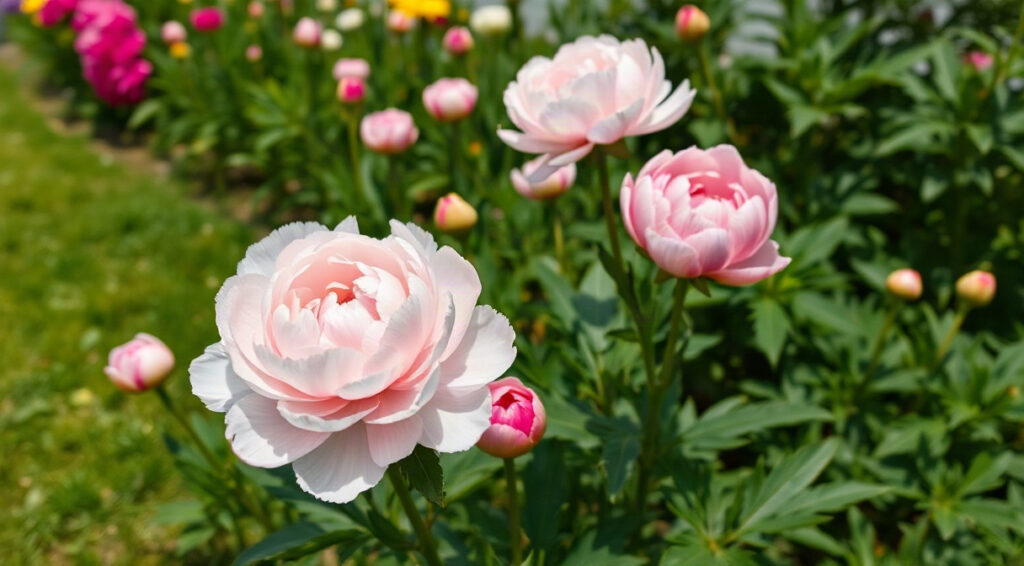
Peony care cut flowers starts well before the first stem reaches a vase: healthy plants, thoughtful bed placement, and the right harvest stage all affect how long blooms last indoors. Peonies are dependable perennials, but their generous flowers need support, good airflow, and patient establishment. A well-planned cutting area can provide armfuls of blooms without leaving the garden bare or weakening the plants for next year.
This guide covers site selection, planting, seasonal maintenance, harvest timing, and conditioning. It also shows how to combine peonies with other cut flowers in a practical flower cutting garden layout that replenishes itself. With a few measured cuts and consistent care, you can enjoy indoor arrangements while preserving strong roots and future flowering.
1. Choose a Site and Plan a Peony Cutting Bed
Begin with the location, because mature peonies dislike being moved. Choose a site with at least six hours of direct sun; eight hours generally encourages sturdier stems and more flowers. In hot climates, light afternoon shade can reduce heat stress, but deep shade often means fewer buds and weak stems. Good drainage is essential. Waterlogged soil can damage roots and invite disease, so avoid low pockets where rainwater sits.
Allow room for mature plants rather than judging spacing by the size of a nursery pot. Most herbaceous peonies need about 3 feet between plant centers; vigorous varieties may need 3½ feet. Space tree peonies according to their expected spread, often 4 feet or more. Rows with 3 to 4 feet between them make weeding and harvest easier. A clear path also keeps you from stepping on crowns while reaching for stems.
For practical perennial border planning, separate the peonies from annual vegetables and frequently disturbed beds. Their roots can remain in place for decades, while a nearby path gives you access for cutting, staking, and cleanup. Put taller varieties toward the back or north side of a bed so they do not shade shorter plants. Place a few early, midseason, and late cultivars together to extend the harvest window.
Before planting, loosen the soil across the bed, not just a narrow hole. Mix in mature compost if the soil needs organic matter, but avoid filling the planting hole with rich amendments that create a sharp contrast with surrounding soil. A simple soil test can identify pH or nutrient issues; peonies generally grow well in fertile, well-drained soil with a near-neutral pH. Do not add fertilizer by guesswork, since excess nitrogen can produce leafy growth at the expense of flowers.
Plan for access as well as appearance. Keep a narrow path through or beside the cutting row, and leave enough working space to carry a bucket without brushing neighboring stems. In a mixed bed, group peonies in blocks of three or five rather than scattering single plants. Blocks simplify watering and support installation, and give the display a fuller look. Keep labels at the bed edge so you can identify cultivars after blooms fade.
- Choose a sunny, well-drained site with room for mature plants.
- Set aside a permanent bed and make the harvest route easy to reach.
- Use a range of bloom times to spread flowers across the season.
For a broader planting scheme, coordinate peonies with nectar-rich companions such as catmint and salvia; see these bee-friendly garden plant choices. In colder areas, check the suitability of cultivars alongside these cold-hardy perennials for Zone 5. The bed should serve both the vase and the garden, without crowding the peonies or blocking pollinators.
2. Plant Peonies for Strong Growth and Reliable Returns
Plant bare-root herbaceous peonies in fall, typically September through October in many temperate regions, while the soil is still workable. Container-grown plants can be planted in spring or fall, but avoid planting during extreme heat. A healthy division should have firm roots and at least three to five visible eyes. Smaller divisions may take longer to flower, so do not judge their success by the first season alone.
Planting depth is one of the most important details in peony care cut flowers. In cold-winter regions, position the eyes about 1 to 2 inches below the finished soil surface. In warmer regions, keep them closer to 1 inch deep. Eyes planted too deeply may produce plenty of foliage but few or no flowers. Set the crown at the correct depth, spread roots naturally, backfill with soil, and water thoroughly to settle it.
Do not bury a peony crown beneath a deep layer of mulch. A light layer can help suppress weeds and preserve moisture, but keep it thin and pull it back from the crown. Mark the planting location so spring cultivation does not damage emerging shoots. Water newly planted roots after planting, then keep the soil evenly moist until the ground cools, without leaving it saturated.
Expect establishment to take time. A newly planted peony may produce few flowers during its first year, and some gardeners remove early buds so the plant can direct energy toward roots. In the second year, growth often improves, but flowering can still vary. Mature plants usually become more productive when they receive consistent sun and are not crowded. Avoid dividing or transplanting without a clear reason; a settled clump can flower reliably for many years.
Build the rest of the cutting bed around the peony’s long-term footprint. Annuals such as cosmos, zinnias, and sunflowers can fill open space during establishment, but plant them where their roots and watering needs will not disturb the crowns. Keep vigorous spreaders away from peonies. In a compact flower cutting garden layout, place annual rows on the sunny side and leave permanent perennials in a dedicated strip. This keeps spring sowing and autumn cleanup from becoming disruptive.
Install support before stems flop. Peony hoops or grid supports can go in when shoots are 6 to 10 inches tall, before foliage becomes dense. Set the support low enough to hold the stems but high enough that it does not trap flower heads. Do not wait until a heavy rain bends the plant; forcing wet, brittle stems upright can cause breaks. Support is especially useful for large double-flowered cultivars, whose blooms become heavy after rain.
- Set the crown at the right depth for your climate.
- Water in, mark the planting spot, and keep the bed weed-free.
- Add supports early, before stems begin leaning.
For additional soil preparation ideas that avoid unnecessary digging, explore the no-dig gardening method for healthier soil. Adapt any method to the planting depth peonies require: a thick layer of new material over an established crown can bury the eyes and reduce flowering.
3. Maintain Healthy Plants Through the Growing Season
Water deeply during dry spells, especially while shoots are growing and buds are forming. A slow soak at soil level is better than frequent, shallow sprinkling, which encourages surface roots and leaves foliage wet. Established plants can tolerate brief dry periods, but prolonged drought may reduce flower size and stress the crown. Check soil beneath the surface before watering; if it is still moist, wait rather than following a rigid calendar.
Keep leaves as dry as practical and provide good airflow. Botrytis blight can cause darkened shoots, bud failure, and fuzzy gray growth, particularly during cool, wet spring weather. Remove affected plant material promptly and discard it rather than leaving it in the bed. Do not compost diseased stems unless your composting system reliably reaches temperatures that destroy pathogens. At the end of the season, clear fallen leaves to reduce disease carryover.
Feed conservatively. If the bed was prepared with reasonably fertile soil, a heavy fertilizer program is unnecessary. Apply a balanced, low-nitrogen fertilizer in spring only if a soil test or poor growth indicates a need, following the product label. Excess nitrogen encourages soft foliage that can flop and may leave fewer flowers. Keep fertilizer off crowns and water it in as directed. A thin compost top-dressing can improve soil over time, but do not pile it over the eyes.
Ants on peony buds are usually feeding on nectar and are not required for the flowers to open. They do not need to be removed for garden health. However, inspect buds for aphids and other pests if growth looks distorted. Avoid broad-spectrum sprays that can harm beneficial insects. Cut and remove badly affected material, and use targeted control only when the pest is identified and damage justifies intervention.
Deadhead spent flowers if you do not want seed pods, cutting back to a strong leaf. Do not cut the entire leafy stem after flowering. The foliage gathers energy that helps the plant build next year’s buds, so it should remain in place until it yellows naturally in fall. In autumn, cut herbaceous peony stems close to the ground after the foliage has died back, and clear the debris. Tree peonies have woody stems and should not be cut down in this way.
Observe each cultivar for a full season and note the first bloom, flower form, stem strength, and how quickly petals drop indoors. These records help refine perennial border planning and stagger future cuts. A variety that blooms beautifully but collapses after rain may need firmer support or a more sheltered position. The best cutting cultivar is not just attractive; it has a stem length and structure that suit your arrangements.
Peonies are outdoor perennials, not houseplants. Once cut, their needs change: clean water, a cool location, and careful handling matter more than growing conditions. General indoor plant-care guidance is a different topic, but the according to Royal Horticultural Society resource offers useful background on maintaining a healthy indoor environment. For peony growing information, consult your local extension or horticultural service as well.
For regional planting and care guidance, the University of Minnesota Extension peony guide explains practical care for cold-climate gardens. Local climate can shift planting and cleanup timing, so use calendar months as a guide and watch soil and plant growth.
4. Harvest at the Right Stage and Condition Stems
The best harvest stage depends on when you want the flowers to open. For a bouquet that will open soon, cut when the bud feels soft like a marshmallow and the petals are beginning to loosen. For storage or transport, harvest while buds are firmer but showing color. A tightly closed, hard bud may fail to open well, especially if cut too early or kept too dry. Check several buds rather than relying on color alone.
Harvest in the cool part of the morning after dew has dried, or in the evening when the plant is not heat-stressed. Use clean, sharp secateurs and a clean bucket. Cut stems at an angle, leaving at least two or three sets of healthy leaves on each stem so the plant can photosynthesize and replenish energy. Taking every stem from a young plant can weaken it; in the first few years, limit cutting and prioritize root establishment.
Good peony care cut flowers means treating each stem as part of next year’s plant, not as a disposable stem. On established plants, avoid removing more than about one-third of the flowering stems in a season. Leave foliage on the plant and do not cut stems down to the crown. If you want a large indoor display, grow more plants rather than stripping one clump. Cutting selectively also leaves blooms for garden enjoyment and pollinators.
Remove lower leaves that would sit below the waterline, but keep upper foliage if it looks healthy and supports the arrangement. Place stems immediately into a clean bucket of cool water, out of direct sun. Recut the bottom of each stem with a sharp blade before arranging. Strip away any damaged petals and inspect buds for insects. A quick, gentle rinse can remove dirt, but do not soak the flower heads.
To condition blooms for same-day use, let stems hydrate in a cool, shaded place for several hours before arranging. For longer storage, wrap dry stems loosely in paper and refrigerate them in a clean, cool refrigerator, away from ripening fruit. Fruit releases ethylene, which can shorten flower life. Keep stems dry while wrapped, and do not store them alongside food in a way that risks contamination. Check buds daily and discard any stem that becomes soft or moldy.
When making an arrangement, use a thoroughly washed vase and fresh water. Add commercial flower food according to its label; do not guess at a stronger concentration. Change the water every day or two, rinse the vase, and recut stems if they become slimy. Keep the display away from direct sun, heating vents, and ripening fruit. Cooler room temperatures generally help flowers last longer, though a vase should not be placed where it may freeze.
- Cut soft buds for near-term display; choose firmer colored buds for later opening.
- Leave foliage and enough stems on the plant to support recovery.
- Hydrate in a clean bucket and keep arranged flowers cool.
5. Design a Cutting Garden That Replenishes Itself
Peonies have a concentrated bloom period, so a resilient cutting garden needs flowers that take over before and after their main flush. Think in layers of season and height. Early bulbs or foliage can fill spring gaps; peonies provide the central display; then annuals and later perennials carry the harvest into summer and fall. Choose plants that share the bed’s light and drainage needs, rather than mixing species simply because they look attractive together.
A useful flower cutting garden layout separates permanent crops from annual rows. Give peonies a long-term strip with stable paths, then place annuals in accessible beds where you can sow, rotate, and remove plants each year. Paths around 18 to 24 inches wide suit a small garden, while a main route wide enough for a bucket and wheelbarrow saves effort in a larger plot. Keep frequently cut flowers close to the path to avoid trampling soil.
Choose companions for staggered bloom, stem length, and vase life. Foxgloves, alliums, and early irises can complement spring peonies; later, try cosmos, snapdragons, zinnias, and dahlias in sunny ground. Include foliage plants such as basil or lady’s mantle for arranging. Match each plant to its eventual height and spread, and check labels for spacing. Overcrowding reduces airflow and makes harvest difficult, even when the bed looks lush at planting time.
Keep the garden productive by replacing annuals and dividing only those perennials that benefit from it. Peonies do not need routine division; a healthy clump can remain undisturbed for many years. If a mature plant has declined and the site is suitable, divide it in early fall, making sections with several eyes and healthy roots. Replant divisions promptly at the correct depth. Expect reduced flowering during establishment, and avoid dividing just to multiply plants quickly.
Use a simple succession plan for annual flowers. Sow a small batch of fast-growing varieties every two or three weeks during the suitable season instead of planting every seed at once. This spreads the harvest and reduces a brief glut. Leave room for a second sowing where an early crop finishes, and rotate annuals to discourage repeated pest and disease problems. Do not disturb peony roots when preparing the next row; keep the permanent and annual zones distinct.
Build soil gradually with compost and mulch pathways to control weeds, taking care not to cover peony crowns. Record what you cut, what opened well indoors, and which stems were too short or fragile. Those notes make perennial border planning more precise each winter: you can add a late-season perennial where the harvest drops off, move a path that proves awkward, or replace an annual that repeatedly flops.
A replenishing garden is not one that never needs attention; it is one where the structure does not need to be rebuilt each spring. Maintain the permanent peony bed, replace annuals in measured batches, and leave space for plants to mature. Include some flowers for bees and other beneficial insects, and allow a small share of blooms to remain outdoors. A balanced planting delivers generous cutting while protecting the plants that make next year’s display possible.
With that balance in mind, peony care cut flowers becomes a repeatable routine: establish plants carefully, protect their foliage after flowering, harvest selectively, and coordinate companion crops around the peony season. The bed will offer variety rather than a single burst, and healthy crowns can return to anchor the garden each spring.
Frequently Asked Questions
When should I cut peonies for a vase?
Cut in the cool morning or evening. Choose buds that feel soft like a marshmallow for flowers that should open soon. For later use, select colored buds that are firmer but not rock-hard. A hard, immature bud may not open reliably indoors.
How many peony stems can I cut from one plant?
Keep the plant’s age and vigor in mind. Avoid heavy cutting from young plants, and leave at least two or three sets of leaves on each harvested stem. Even established plants benefit from selective cutting rather than having every flowering stem removed.
Why do my peonies have leaves but no flowers?
Common causes include planting the eyes too deeply, too much shade, excess nitrogen, or a plant that is still establishing. Check planting depth and light first. A mature plant may also need improved airflow or support, but moving it is best reserved for a clear site problem.
How can I make cut peonies last longer indoors?
Use a clean bucket and vase, remove leaves below the waterline, and keep stems cool while they hydrate. Change water every day or two and keep the arrangement away from heat, direct sun, and ripening fruit. Harvesting at the right bud stage also helps.
Can I cut peonies right down to the ground after flowering?
No. Leave healthy leaves and stems after bloom so the plant can store energy for the following season. Remove only spent flower heads if desired. Cut herbaceous peony foliage near ground level after it yellows and dies back in fall; woody tree peonies need different pruning.
Do peonies need to be divided every few years?
No. Peonies can flower for many years without division. Divide a mature plant only when it is declining, crowded, or needs to be moved, and do so in early fall. Each division needs healthy roots and several eyes to establish well.
Conclusion: Keep the Garden Blooming Year After Year
Long-lasting arrangements begin with a healthy, permanent peony bed and continue with careful harvest and conditioning. Give plants sun, drainage, correct planting depth, and time to establish. Then take only a portion of the stems, retain healthy foliage, and combine peonies with companions that extend the season. These steps make peony care cut flowers practical for both the vase and the garden.
Sketch your beds, note the bloom times you want, and start with a manageable number of plants. For more inspiration to plan and care for your outdoor space, visit Blossom Gardens Hub garden guides. A thoughtful cutting garden can provide beautiful indoor flowers now and strong returning growth in the seasons ahead.
