
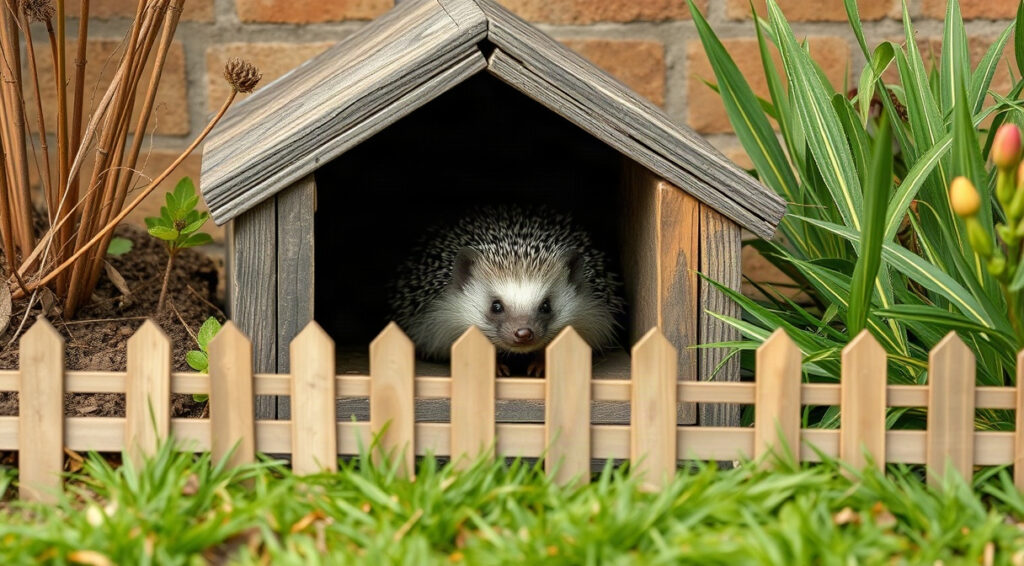
how to attract hedgehogs to garden is a question best answered by thinking beyond a single feeder or shelter box. Hedgehogs need connected routes between gardens, places to forage, safe water and undisturbed cover in which to rest and hibernate. A welcoming yard supplies these essentials while reducing hazards such as uncovered drains, garden netting and pesticides. No feature can guarantee a visit: hedgehogs are wild animals, and local populations and food availability vary. But practical changes can make your garden more usable whenever a hedgehog is nearby.
This guide explains how to create a safe route into your plot, support natural food, build shelter and maintain a wildlife corridor backyard. The ideas suit small and large gardens, and most can be added gradually. Prioritize access and safety first, then improve habitat without turning a quiet wild corner into a place that needs constant attention.
1. Open Safe Routes to Make a Wildlife Corridor Backyard
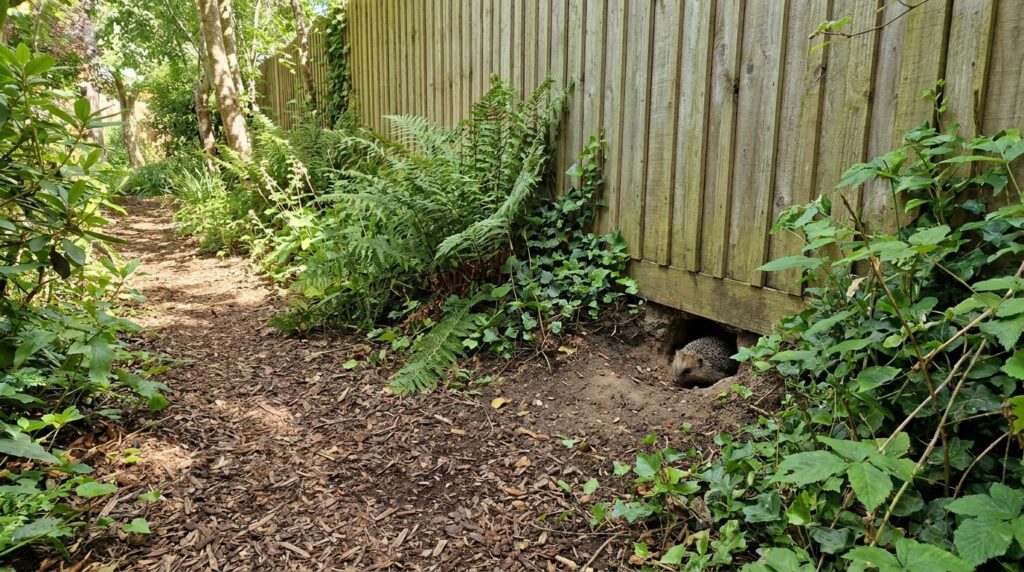
Hedgehogs roam across several gardens as they search for food and shelter, so a sealed boundary can matter more than the planting inside one plot. A useful first step in how to attract hedgehogs to garden is to connect your space to nearby habitat. Speak with neighbors before changing a shared fence or boundary, then make a small ground-level opening where it will stay clear and safe.
Make a simple, visible passage
A commonly recommended opening is about 13 centimetres square, roughly 5 inches by 5 inches. That is large enough for a hedgehog to pass through while limiting access for some larger animals, though it does not exclude pets or wildlife. Cut the opening at ground level in a wooden fence, or create a gap beneath a gate. Smooth rough edges and remove sharp wire, splinters and loose fasteners. Avoid placing the passage beside a road, a drain or a deep drop.
Keep the route open year-round. A gap can quietly become blocked by stored pots, fallen branches, a new fence panel or thick piles of leaves. If several households agree to connect their openings, the result is a wildlife corridor backyard: a chain of usable gardens rather than an isolated patch. A small sign on the fence can help remind everyone not to close the route accidentally.
Connect the entrance to cover
Hedgehogs are more likely to use a passage that leads to cover than one that opens onto a bright, bare patio. Plant a mixed native hedge, leave a strip of long grass, or guide the route alongside shrubs. If space is tight, a line of leafy planters can provide some cover, but leave gaps so an animal cannot become trapped behind pots. Keep the passage free of loose netting, plastic garden mesh and garden tools.
When planning a broader layout, use a naturalistic boundary and winding routes rather than a maze of impenetrable barriers. For ideas on making a difficult site function in connected levels, see these terrace and sloped-garden layout ideas. The goal is not to make a hedgehog follow a prescribed path, but to keep safe options open between feeding and resting places.
- Ask neighbors whether they can add or preserve matching ground-level gaps.
- Check gates and fence bases in spring and autumn, when repairs may close old routes.
- Keep access away from busy driveways, ponds without exits and uncovered holes.
Do not assume that a hedgehog has stopped visiting just because you do not see one. These animals are mainly active at night, and a quiet route can be used without leaving obvious evidence. A small wildlife camera may help confirm activity, but it is optional; habitat improvements are worthwhile even when sightings are occasional.
2. Grow Natural Food and Provide Safe Water
Foraging habitat is more useful in the long term than trying to lure wildlife with a large pile of food. Hedgehogs eat invertebrates, including beetles, caterpillars and earthworms, and a varied garden can support those prey. When people ask how to attract hedgehogs to garden, the answer should include a healthy, lightly managed food web—not just a feeding station. Encourage insect life by keeping some vegetation, leaf litter and soil undisturbed.
Make room for prey
Reserve a modest corner for a mix of ground cover, native shrubs and flowering plants. Ivy, bramble and native hedgerow species can provide structure and food for insects, while a patch of longer grass gives invertebrates shelter. Choose plants appropriate to your region and soil, and avoid introducing invasive species. A selection of nectar-rich flowers can support pollinators that help make a garden more lively; browse these bee-friendly flowering plant ideas for inspiration.
Allow leaves to remain beneath shrubs where practical, and leave a small area of bare soil for ground-dwelling insects. Do not turn every corner into a dense thicket: keep paths visible, provide a clear route to water and check piles before moving them. If you compost garden waste, use a secure, well-managed system and inspect it before turning or emptying it, as wildlife may shelter inside. Learn good handling and composting practices according to RHS Composting Guide.
Offer water, not unsuitable treats
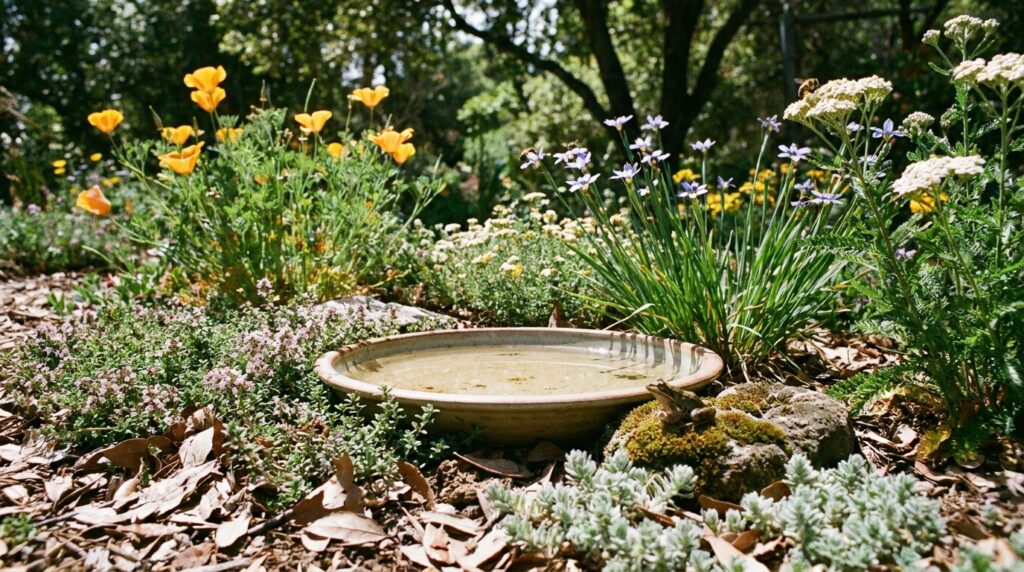
Put out a shallow, stable dish of fresh water at ground level. A heavy ceramic dish is less likely to tip than a light plastic one. Choose a low rim and clean it regularly, especially in warm weather, so the water stays fresh and does not become a breeding place for insects. Place it near cover but not where a hedgehog must cross a busy path or climb a steep edge to reach it. Refill during dry spells and check the dish as part of the evening garden routine.
Some people choose to offer a small amount of meaty cat or dog food or specialist hedgehog food when natural food is scarce. This is supplemental food, not a substitute for habitat. Use a clean, shallow dish, offer modest portions and remove leftovers in the morning to reduce pests and spoilage. Never feed milk or bread; hedgehogs cannot digest milk properly, and bread is not a suitable diet. Avoid leaving large quantities out overnight, which may attract unwanted visitors.
Do not use slug pellets or broad-spectrum insecticides to protect plants. These can poison wildlife directly or reduce the invertebrates hedgehogs depend on. Hand-pick pests, use barriers and choose resilient planting instead. Organic practices still require care: a product described as natural can harm non-target animals if used carelessly. This balanced approach to food is central to hedgehog friendly garden design, because it supports the whole habitat rather than a single visitor.
3. Create Shelter for Resting and Winter Hibernation
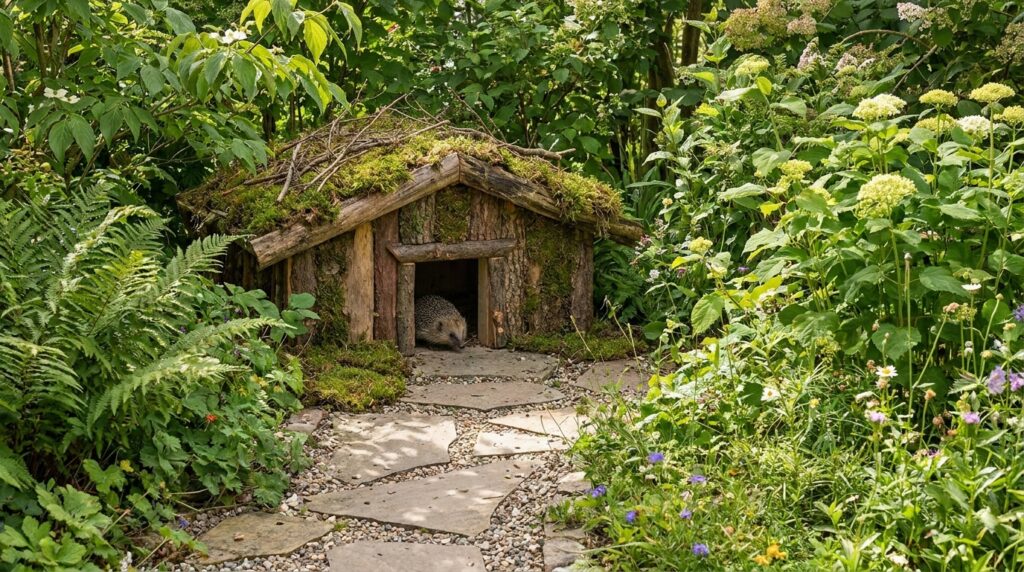
Hedgehogs need places to sleep during the day and, in colder parts of their range, safe nest sites for winter hibernation. A garden can offer cover without looking untidy everywhere. Combine dense planting, a discreet log pile and a purpose-built hedgehog house if you have room. Shelter should stay dry, shaded and quiet, and it should not be opened for casual inspection. Learning how to attract hedgehogs to garden means making a refuge available, then allowing the animal to choose whether to use it.
Use natural cover and a deliberate wild corner
Keep a small area of leaves and twigs beneath shrubs, or establish a loose, stable log pile in a quiet corner. Place logs so they cannot roll, and do not stack them against a fence that may need repair. Leave vegetation around the shelter, but do not let it block the entrance. Bramble, native hedging and dense ground cover can create useful daytime hiding places, provided routes through the garden remain open and there are no loops of netting or wire in the undergrowth.
A log pile is not a bonfire pile. Never burn garden waste without checking it thoroughly and moving material carefully; hedgehogs and other wildlife may be hidden inside. The safer choice is to keep a permanent habitat pile well away from planned fire sites. If a bonfire is unavoidable, build it on the day of burning from material stored elsewhere, and inspect the entire pile carefully before lighting. Better still, compost suitable garden trimmings rather than burning them.
Choose and site a hedgehog house thoughtfully
A ready-made or home-built hedgehog house can add a sheltered option. Many designs are approximately 40 centimetres long, 30 centimetres wide and 30 centimetres high, with an entrance around 13 centimetres square, but dimensions vary. Follow a reputable plan, use untreated, weather-resistant materials and make sure the structure is stable. A narrow entrance or short tunnel may help reduce disturbance, while drainage and a dry roof are essential. Do not add food inside: it can attract other animals and make the nest damp or dirty.
Place the house in a quiet, shaded spot, ideally against a hedge or beneath shrub cover. Set it on firm, level ground and point the entrance away from prevailing wind and direct exposure, while keeping the route clear. Add a modest layer of dry leaves nearby rather than stuffing the box tightly. Keep the site away from regular digging, play areas, machinery and flood-prone hollows. Do not repeatedly lift the lid to check for occupancy, especially in winter or when a mother may be raising young.
One common mistake is moving a house once it may be occupied. Disturbing a resting animal can cause stress, and shifting a nest during cold weather can expose it to danger. Choose the location carefully before installation and leave it undisturbed. If you find a hedgehog in immediate danger or injured, contact a qualified wildlife rescue service for local advice rather than handling or relocating it without guidance.
In small yards, even a compact planted corner can help. Keep pots grouped along one boundary, add a low shrub and preserve a leaf-covered strip underneath. A full-size box is not essential: interconnected cover, access and safe water are more valuable than a decorative shelter placed in an exposed spot. This practical approach makes hedgehog friendly garden design adaptable to courtyards as well as larger plots.
4. Remove Hazards and Make Everyday Garden Work Safer
Attractive habitat must also be safe habitat. Tools and garden products can create risks that are easy to overlook, particularly because hedgehogs are active after dark and may shelter in unexpected places. A useful answer to how to attract hedgehogs to garden includes a regular hazard check, not simply adding more features. Walk the garden before mowing, trimming, digging or lighting a bonfire, and pause if you hear movement in vegetation.
Check common hazards before work
Inspect long grass and the base of hedges before using a mower, strimmer or powered tool. Where possible, work from the centre of a patch outward so animals have a chance to escape. Check compost heaps, leaf piles and sheds before moving or disturbing them. Store sharp tools safely, cover open drains and holes, and keep garden netting taut and raised well above ground level or replace it with a safer barrier. Loose mesh can entangle a hedgehog or restrict movement.
Ponds and water features need an easy escape route. Fit a rough, gently sloping ramp that reaches from the water to the bank, and secure it so it cannot slip. Check that a hedgehog could climb out from every section of the edge; steep sides can trap animals even when the water looks shallow. Cover water butts, wells and other openings with secure lids or fine, rigid covers. Do not rely on an animal to find a small exit after falling in.
- Before mowing: inspect the grass, move wildlife only with expert advice if necessary, and use a cautious setting.
- Before digging: check the ground and work slowly around dense cover, compost and established nests.
- Before using chemicals: read the label and avoid pesticides, slug pellets and herbicides where wildlife may be exposed.
- Before a fire: inspect the pile carefully and, whenever possible, avoid burning wildlife habitat.
Reduce disturbance and pet conflicts
Keep dogs under supervision after dark, especially in gardens where hedgehogs may visit. A dog that investigates or repeatedly paws at a shelter can injure an animal or make the site unusable. If you know hedgehogs are active, consider keeping pets away from the feeding and nesting areas overnight. Secure food dishes after use and do not leave pet food scattered around the garden.
Bright lighting can make a garden less useful as a quiet route. Use low, shielded lighting only where it is needed for people, and turn it off when not in use. Avoid placing motion lights directly over a shelter or passage. Noise from ordinary garden life is unavoidable, but repeated disturbance can be reduced by siting a house away from patios, play equipment and machinery. A calm corner is usually more valuable than a highly visible feature.
Use gloves when handling garden materials, and wash hands after contact with wildlife or animal waste. If you discover a hedgehog that seems injured, unusually lethargic or out in severe cold during daytime, do not assume it simply needs feeding. Contact a local wildlife rehabilitator or veterinary professional for advice. Health, wildlife regulations and rescue services vary by location, so follow local guidance.
A safer garden is not a perfectly controlled garden. It is one where the biggest risks are anticipated: barriers are visible, water has exits, chemicals are avoided and habitat is checked before disturbance. Review these points at the start of the active season and again before autumn garden clear-up, when animals may be preparing nests.
5. Build a Seasonal Plan for a Hedgehog-Friendly Garden
Hedgehog habitat changes through the year, so it helps to plan small tasks by season instead of making a dramatic one-day makeover. The best how to attract hedgehogs to garden strategy is consistent: retain connected access, provide cover, avoid harmful chemicals and keep water available. In a hedgehog friendly garden design, every feature should have a purpose and remain easy to maintain without disturbing potential nest sites.
Spring and summer: check routes and support foraging
In March and April, depending on local weather and the hedgehogs in your area, inspect fence gaps, gates and water access. Remove hazards from paths and make repairs without closing a passage. As growth accelerates in late spring, keep some lawn edges longer and leave a small patch of ground undisturbed. You can still mow the rest of the lawn; just check carefully first and avoid cutting into dense cover without inspection.
From May through August, keep a fresh, shallow water dish available during dry weather. Check that pond ramps remain secure, and keep pet food indoors rather than leaving it outside all day. Flowering plants, shrubs and leaf litter support invertebrates, but do not overwater or turn every damp corner into a mosquito-prone puddle. Adapt tasks to your climate, and use regional advice for species and planting choices.
Autumn and winter: prepare shelter without clearing it
In September and October, check that a nest box is dry, stable and still accessible, then leave it alone. Keep fallen leaves beneath shrubs where possible and move only what is needed from paths. Avoid a thorough garden clear-out that removes every sheltering spot. Additions to a permanent leaf or log area are better made well before a possible winter occupant settles in. Never put a hedgehog into a house or try to force it to hibernate.
During colder months, reduce disturbance around known nest sites. Do not lift a house to see whether it is occupied, and do not move logs or compost without checking. Mild winters and local climates can change activity patterns, so there is no single calendar that applies everywhere. If an animal appears unwell or exposed, seek local wildlife advice rather than making assumptions based on the season.
Keep the design simple enough to sustain
A wildlife corridor backyard works best when neighbors can maintain it without special equipment. Agree on which fence openings should remain, share reminders before boundary work and avoid placing bins or stored materials across routes. Use a simple seasonal checklist instead of trying to monitor wildlife every night. Occasional signs such as footprints, droppings or camera footage may show activity, but a lack of evidence does not mean that a habitat improvement has failed.
Choose features that fit the way you already garden. If you have limited space, connect a single sheltered corner to a safe entrance and water dish. If you have a larger plot, link hedges, meadow-like edges and quiet nesting places. For a damp or rain-prone site, thoughtful drainage and planting can benefit many forms of wildlife; these rain garden design ideas offer ways to manage runoff while creating a more varied yard. Ensure that any water feature still has a reliable escape route.
Make changes in a sensible order: remove immediate hazards, establish a route, add natural cover, then consider a shelter or supplemental food. That sequence prevents a common mistake—installing an attractive house in a garden that remains inaccessible or unsafe. It also gives you time to notice how the space is used and to adjust without over-managing it. The aim is a functioning habitat, not a guaranteed hedgehog sighting.
- Open or preserve a safe ground-level route through the boundary.
- Provide natural cover, insect-friendly planting and a reliable shallow water source.
- Reduce hazards and inspect habitat before garden work.
- Add a quiet shelter only where it can remain undisturbed.
- Review the garden seasonally and coordinate changes with neighbors.
The Royal Botanic Gardens, Kew publishes further plant care guidance worth reading alongside this guide.
Frequently Asked Questions
How do I attract hedgehogs to garden spaces without feeding them?
Start with connected access, natural cover, invertebrate-friendly planting and fresh water. Avoid pesticides and slug pellets, and leave a small area of leaves or longer grass undisturbed. Supplemental food is optional; healthy habitat supports the prey hedgehogs naturally seek.
What size hole should I make in a garden fence?
A passage around 13 centimetres square is commonly recommended. Smooth the edges, keep the opening at ground level and check that it leads to a safe route. Ask neighbors before altering a shared fence, and make sure the gap will not lead directly to a road or drop.
Can I put out milk or bread for hedgehogs?
No. Hedgehogs cannot digest milk properly, and bread does not provide an appropriate diet. If you choose to offer supplementary food, use a modest portion of suitable meaty cat or dog food or specialist hedgehog food, plus fresh water. Remove leftovers regularly.
When should I put out a hedgehog house?
You can install a well-built shelter before the period when hedgehogs in your region may seek winter nests, but it can also offer a resting place at other times. Choose a quiet, dry location, make it stable and leave it undisturbed. Do not open an occupied house to check.
Will a hedgehog house guarantee a visit?
No. Hedgehogs may choose other nesting sites or may not live in your area. A house is only one possible feature. Safe access, undisturbed cover, natural food and freedom from hazards make the whole garden more useful to wildlife, even if you do not see a hedgehog.
How can I tell if a hedgehog is using my garden?
You may spot a hedgehog at night, find small footprints or use a wildlife camera. Avoid disturbing nests to confirm activity. Some visits are brief and irregular, so keep habitat features in place rather than removing them because sightings are infrequent.
Conclusion: Make Your Garden a Safer Place to Visit
To understand how to attract hedgehogs to garden, focus on what a wild mammal needs to move, forage, drink and rest safely. Create a small passage between gardens, grow or retain natural cover, provide fresh water and reduce hazards. Add shelter only where it can remain quiet and undisturbed, and coordinate with neighbors to keep routes connected. Start with one useful change this week, then build on it season by season. Explore more practical planting and outdoor inspiration at Blossom Gardens Hub.
